Singapore Hiring Trends 2026: What HR Leaders Need to Know

Singapore Hiring Trends and Market Intelligence
Singapore's hiring outlook for 2026 shows cautious optimism, with the Net Employment Outlook falling to +15% in Q1 2026, the lowest level since Q1 2022. The Net Employment Outlook measures the difference between the share of employers planning to hire and the share planning to reduce staff, so a positive score still signals expected job growth overall. Employers across the city-state are shifting from aggressive expansion to strategic efficiency, prioritizing precision hiring over volume recruitment. According to ManpowerGroup's Q1 2026 survey, 46% of Singapore employers plan to maintain current staffing levels, while 32% expect to increase headcount and 18% anticipate reductions.
This transition reflects broader economic uncertainty and a maturing post-pandemic labor market. Total employment grew by 24,800 quarter-on-quarter in Q3 2025, while the overall unemployment rate held steady at 2.0%. For HR leaders navigating this landscape, success now depends on recruitment efficiency, data-driven decision-making, and compliance with evolving regulations rather than simply filling positions quickly.
The challenge facing Singapore's HR professionals is clear: hire smarter, not just faster. Organisations that invest in modern applicant tracking systems and structured hiring processes will outperform competitors in securing top talent while controlling costs.
Singapore Employment Outlook 2026: Key Market Data
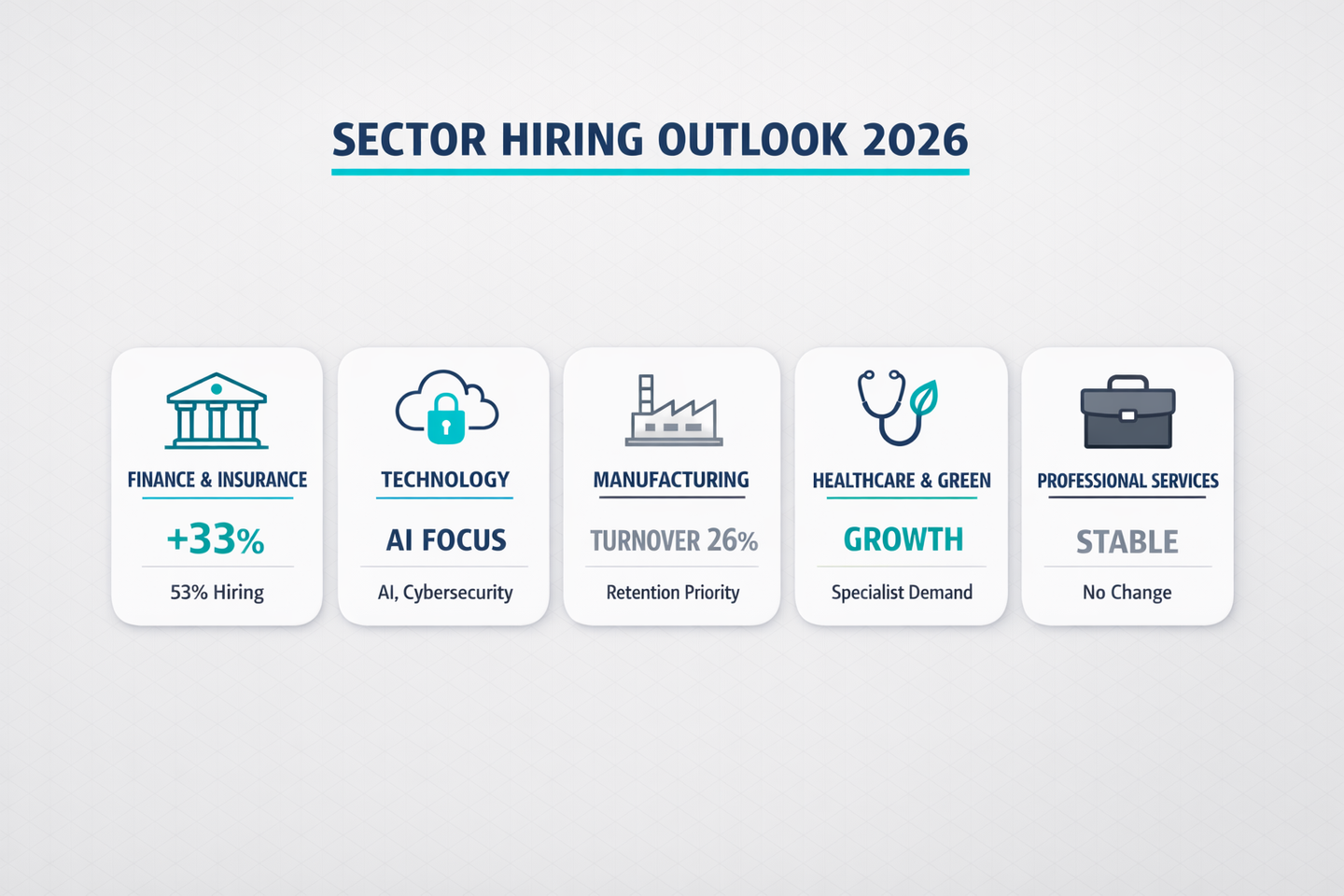
The Finance and Insurance sector leads Singapore's hiring intentions for 2026, with 53% of employers planning to expand headcount, resulting in a sector outlook of +33%, meaning the share of employers expecting to hire exceeds the share expecting to reduce headcount by 33 percentage points. Meanwhile, manufacturing faces significant retention challenges with turnover rates approaching 26%, pushing employers to focus on keeping experienced staff rather than aggressive external hiring.
Understanding sector-specific trends allows HR teams to benchmark their hiring strategies against market realities. While some industries accelerate recruitment, others are consolidating their workforce and investing in retention. This divergence makes it essential for organisations to align their talent acquisition approach with both industry dynamics and broader economic conditions.
Sector-by-Sector Hiring Outlook
Finance and Insurance demonstrates the strongest hiring appetite across Singapore's economy, driven by continued digital transformation and regulatory compliance needs. Technology hiring has become more selective rather than expansive, with employers focusing on specialists in AI, cloud infrastructure, and cybersecurity rather than generalist roles.
The sector breakdown reveals important strategic considerations:
- Finance and Insurance: Leading with +33% outlook; 53% of employers actively hiring
- Technology: Selective recruitment focused on AI, data engineering, and cybersecurity specialists
- Manufacturing: High turnover (approximately 26%) shifting focus toward retention over expansion
- Healthcare and Green Sectors: Emerging growth areas with steady demand for specialised talent
- Professional Services: Outlook remained stable compared to previous quarters
Economic uncertainty continues to influence workforce planning across all sectors. Among organisations maintaining headcount, nearly a quarter (23%) are waiting to see how economic conditions evolve before making hiring decisions.
In-Demand Roles for 2026
Teaching roles remain the most in-demand positions in Singapore for 2026, followed by marketing executives and software developers as organizations expand their AI and digital initiatives. Professional, Managerial, Executive, and Technician (PMET) roles now comprise more than half of all job vacancies, creating significant opportunities for skilled professionals.
The demand landscape breaks down as follows:
- Education: Teaching professionals across levels
- Marketing: Marketing executives with digital expertise
- Technology: Software developers, AI/ML specialists, data engineers
- Security: Cybersecurity professionals and compliance specialists
- Operations: IT support managers and infrastructure architects
For companies seeking specialised talent, the competition remains intense despite overall hiring slowdowns. Organisations using automated recruitment workflows can respond faster to qualified candidates, reducing the risk of losing top talent to competitors.
Salary Trends and Compensation Expectations
Overall wage growth is moderating to 4.0 to 4.3% in 2026, a shift from the more aggressive increases seen in previous years. This recalibration reflects employer caution amid economic uncertainty, with organisations focusing on targeted rather than uniform salary increments.
Employee expectations, however, remain high. According to Randstad's 2026 Talent Outlook and Expectations Survey, 53% of Singapore employees said they will look for new jobs if dissatisfied with their pay raise, bonus, or both. Additionally, 41% of respondents indicated willingness to switch jobs if they encounter a better opportunity.
Key compensation trends for 2026 include:
- Targeted increments: Higher adjustments for roles tied to AI, cybersecurity, data, and critical operations
- Variable pay emphasis: Recognition programs and performance bonuses scaling faster than base salary increases
- Sector variations: 33% of Construction and Real Estate employers and 27% of Finance and Insurance employers are more likely to give increments above 5%
- Total rewards focus: Most valued benefits include work-life balance support, healthcare coverage, and flexible work arrangements
Why Recruitment Efficiency Matters More in 2026
With nearly half of Singapore employers holding headcount steady and 23% waiting for economic clarity before hiring, every recruitment decision carries greater weight. Companies that reduce time-to-hire and improve candidate experience gain significant competitive advantages in securing top talent before competitors.
The shift from expansion to efficiency means HR teams must deliver better results with the same or fewer resources. This reality makes recruitment technology and process optimization not just helpful but essential for sustainable hiring success.
The Hidden Cost of Slow Hiring
Globally, the average time to fill a position is approximately six weeks, with Singapore often exceeding this benchmark for competitive roles. Every additional week a position stays open translates directly to lost productivity, overworked existing staff, and missed business opportunities.
The costs compound quickly:
- Productivity loss: Each unfilled position represents unrealised output and revenue
- Team strain: Remaining employees absorb additional workload, increasing burnout risk
- Candidate attrition: Top candidates receive and accept competing offers during prolonged processes
- Employer brand damage: Slow, unresponsive hiring processes create negative candidate experiences that spread through professional networks
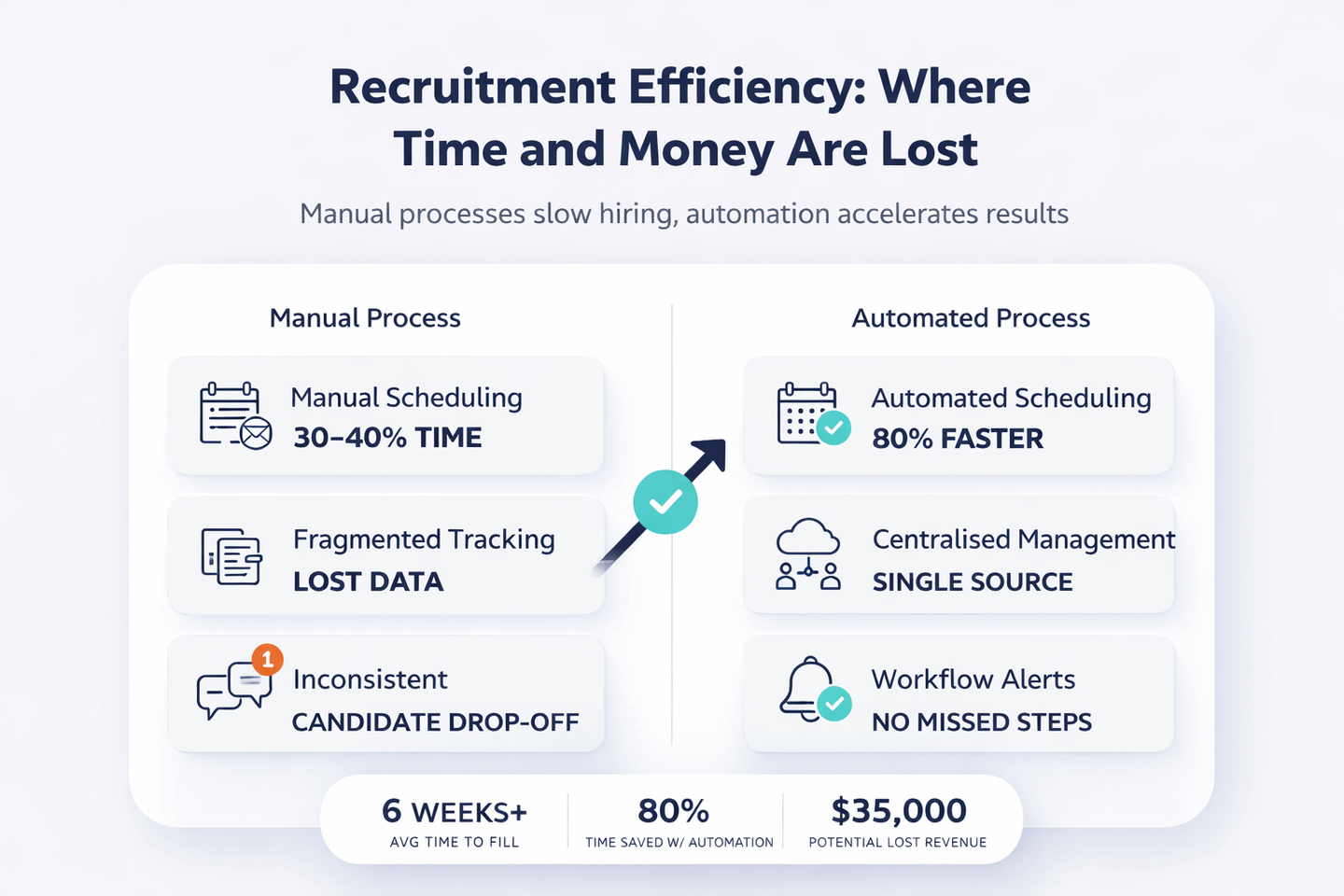
For revenue-generating roles, the financial impact is particularly severe. A sales position generating $1,000 daily that takes five extra weeks to fill represents $35,000 in lost potential revenue, not counting the costs of the hiring process itself.
Where SMEs Lose Time (and Money) in Recruitment
Small and medium enterprises face unique challenges in recruitment efficiency. Recruiters often spend 30 to 40% of their hiring time on scheduling coordination alone, leaving insufficient time for strategic candidate evaluation.
Common efficiency drains include:
- Manual scheduling: Back-and-forth emails to coordinate interview times across multiple calendars
- Fragmented tracking: Candidate information scattered across spreadsheets, email threads, and messaging apps
- Inconsistent communication: Delayed responses and unclear next steps causing candidate drop-offs
- Duplicated effort: Multiple team members performing the same administrative tasks without coordination
These inefficiencies create a vicious cycle. Manual processes slow down hiring, which causes candidate drop-offs, which requires starting the search over, which consumes even more time and resources. Breaking this cycle requires systematic process improvement supported by appropriate technology.
How Automation Transforms Recruitment Timelines
Companies using applicant tracking systems (ATS) like Wantedly Hire report significantly improved efficiency metrics. Automated scheduling features can reduce time spent on interview coordination by up to 80%, freeing recruiters to focus on candidate engagement and evaluation.
The transformation happens across multiple dimensions:
- Scheduling automation: AND/OR combinations of interviewers with automatic availability detection and one-click scheduling link generation
- Workflow triggers: Automated emails and task assignments when candidates move between stages
- Centralised management: Single source of truth for all candidate information, communications, and evaluations
- Alert systems: Notifications for pending actions, approaching deadlines, and candidates requiring follow-up
Organisations implementing automated interview scheduling often see time-to-hire decrease from 30 to 45 days with manual processes to approximately 20 days with systematic automation.
ATS Adoption Trends in Singapore
Over 70% of medium-to-large enterprises in Singapore now use some form of applicant tracking system, reflecting the increasing importance of recruitment technology in competitive talent markets. Cloud-based solutions represent approximately 60% of implementations in Singaporean companies, providing scalability and straightforward integration with existing HR platforms.
The rapid adoption reflects a recognition that manual recruitment processes cannot meet the demands of modern hiring. As competition for skilled talent intensifies, organisations need systematic approaches to sourcing, evaluating, and engaging candidates efficiently.
ATS Market Growth in Asia-Pacific
The global applicant tracking system market is expanding rapidly, with projections indicating growth from approximately USD 3.28 billion in 2025 to USD 4.88 billion by 2030, representing a compound annual growth rate of 8.2%. Asia-Pacific is expected to hold over 37% of the global market share by 2035, driven by digital transformation and growing demand for tech-enabled recruitment solutions.
Singapore-specific growth rates are particularly strong:
- Market expansion: ATS-related software and services growing at approximately 8 to 11% CAGR in Singapore
- Cloud dominance: Nearly 60% of Singapore ATS implementations are cloud-based
- AI integration: Machine learning and AI-powered features driving adoption acceleration
Key Features Driving ATS Adoption
Organisations evaluating ATS solutions prioritise features that address specific pain points in their recruitment processes. The most valued capabilities combine automation with analytical insights.
Essential features include:
- AI-powered candidate matching: Automated screening and ranking based on job requirements and candidate qualifications
- Automated interview scheduling: Calendar integration with availability detection and self-service booking
- Customisable workflows: Flexible pipeline stages that adapt to different roles and hiring processes
- Analytics and reporting: Dashboards tracking key metrics like time-to-hire, source effectiveness, and conversion rates
- Compliance support: PDPA-compliant data handling and Fair Consideration Framework documentation
The best ATS platforms offer both efficiency and insight. Wantedly Hire's analytics features, for example, enable organisations to analyse dozens of data fields and filters without exporting to spreadsheets, keeping analysis within the recruitment workflow.
Evaluating ATS Solutions for Singapore Operations
Singapore's unique regulatory environment and multicultural workforce create specific requirements for recruitment technology. Organizations should evaluate potential ATS solutions against local operational needs.
Key evaluation criteria include:
- Local job board integrations: Connections to JobStreet, and regional platforms
- Multi-language support: Interface and communication capabilities in English, Mandarin, and other relevant languages
- Regional scalability: Ability to support hiring across Singapore, Malaysia, and broader APAC markets
- Mobile accessibility: Responsive interfaces for recruiters and candidates accessing systems on various devices
For Singapore SMEs, implementation speed matters significantly. Solutions like Wantedly Hire offer onboarding support that enables organisations to begin using the system within days rather than weeks.
How to Build Compliance-Ready Hiring Practices in Singapore
Singapore's regulatory environment increasingly requires employers to demonstrate that hiring decisions are merit-based, documented, and consistent. With the Workplace Fairness Act transforming existing guidelines into binding legal obligations and the Personal Data Protection Act carrying penalties of up to S$1 million or 10% of annual turnover for non-compliance, building compliant processes into daily recruitment workflows is no longer optional, it's a business imperative.
For SMEs, the challenge is not just understanding these obligations but embedding them into everyday hiring without adding administrative burden. This is where a well-structured ATS delivers value beyond efficiency alone.
How Structured Hiring Supports Regulatory Readiness
Regulators want to see evidence that candidates are assessed on merit, not preference. Yet 48% of HR managers admit that biases affect the candidates they hire, and one-third of candidates report having experienced bias during the interview process. The gap between intent and practice is exactly where structured interview frameworks close the loop.
Structured interviews predict job success approximately twice as effectively as unstructured conversational approaches, and research shows they can reduce hiring bias by up to 85% compared to unstructured formats. This consistency is precisely what produces the kind of documented, merit-based decision trail that compliance frameworks require.
Wantedly Hire's structured interview features include sample hiring criteria and interview questions for 12 job categories, enabling organisations to implement standardised evaluation immediately without building frameworks from scratch. When every candidate answers the same questions evaluated against the same rubric, organisations naturally generate the objective, skills-based records that demonstrate fair consideration practices.
Turning Recruitment Data into Compliance Documentation
Beyond structured evaluations, the ability to track and analyse hiring outcomes is critical for demonstrating compliance readiness. Organisations need clear visibility into why candidates progress or exit the process, how different sourcing channels perform, and whether evaluation criteria are applied consistently across roles.
Wantedly Hire's customisable rejection and withdrawal reason tracking allows organisations to standardise outcome documentation and identify patterns across roles and departments. Source-level analytics provide visibility into whether recruitment channels are reaching representative applicant pools, while funnel conversion reporting highlights where bottlenecks or inconsistencies may signal process issues worth investigating.
A Practical Approach to Compliance
Rather than treating compliance as a separate administrative layer, the most effective approach is to select recruitment tools and workflows that naturally produce compliant outcomes. Standardised evaluations create fair consideration documentation. Source tracking enables diversity monitoring. Access controls support data protection. Analytics provide the audit trails that regulatory reviews require.
The organisations that build these practices into their recruitment systems from the start will spend less time scrambling to demonstrate compliance and more time focused on finding the right talent.
ATS platforms with built-in compliance features help organisations maintain proper data handling practices automatically, reducing the risk of inadvertent violations and creating audit trails for regulatory reviews.
Structured Interviews: Improving Hiring Quality
Structured interviews are approximately twice as effective at predicting job success compared to unstructured conversational approaches. By using standardised questions and consistent evaluation criteria, organisations reduce bias, improve candidate assessment accuracy, and make better hiring decisions.
The benefits extend beyond individual hiring decisions. Companies with high ethnic and racial diversity see financial performance 35% above industry averages, making bias-free hiring processes a business imperative rather than just an ethical consideration.
Why Structured Interviewing Works
The foundation of structured interviewing is consistency. When every candidate answers the same questions in the same order, evaluated against the same criteria, organisations can make objective comparisons based on job-relevant qualifications rather than personal rapport or interviewer preferences.
Key advantages include:
- Predictive validity: Research consistently shows structured approaches outperform unstructured interviews in predicting actual job performance
- Bias reduction: Standardised evaluation criteria minimise the influence of unconscious preferences related to appearance, background, or communication style
- Fairness: All candidates receive equal opportunity to demonstrate their qualifications
- Legal defensibility: Documented, consistent processes provide protection against discrimination claims
The statistics supporting structured interviewing are compelling. With 75% of employers admitting they have hired the wrong person for a position, systematic interview approaches represent a significant opportunity to reduce costly hiring mistakes.
Implementing Structured Interview Frameworks
Effective structured interviewing requires upfront investment in framework development. Organisations must define what success looks like for each role before designing questions and evaluation criteria.
Implementation steps include:
- Define competencies: Identify the hard and soft skills essential for success in each role
- Develop question banks: Create behavioral and situational questions that reveal relevant competencies
- Build scoring rubrics: Establish clear criteria for evaluating responses on consistent scales (typically 1 to 5)
- Train interviewers: Ensure all team members understand how to ask questions consistently and apply evaluation criteria objectively
- Calibrate regularly: Review hiring outcomes and refine frameworks based on performance data
Wantedly Hire's structured interview features include sample hiring criteria and interview questions for 12 job categories, enabling organizations to implement structured approaches quickly without building frameworks from scratch. The platform also supports customization, allowing teams to adapt standard templates to their specific needs.
Data-Driven Recruitment: Metrics That Matter
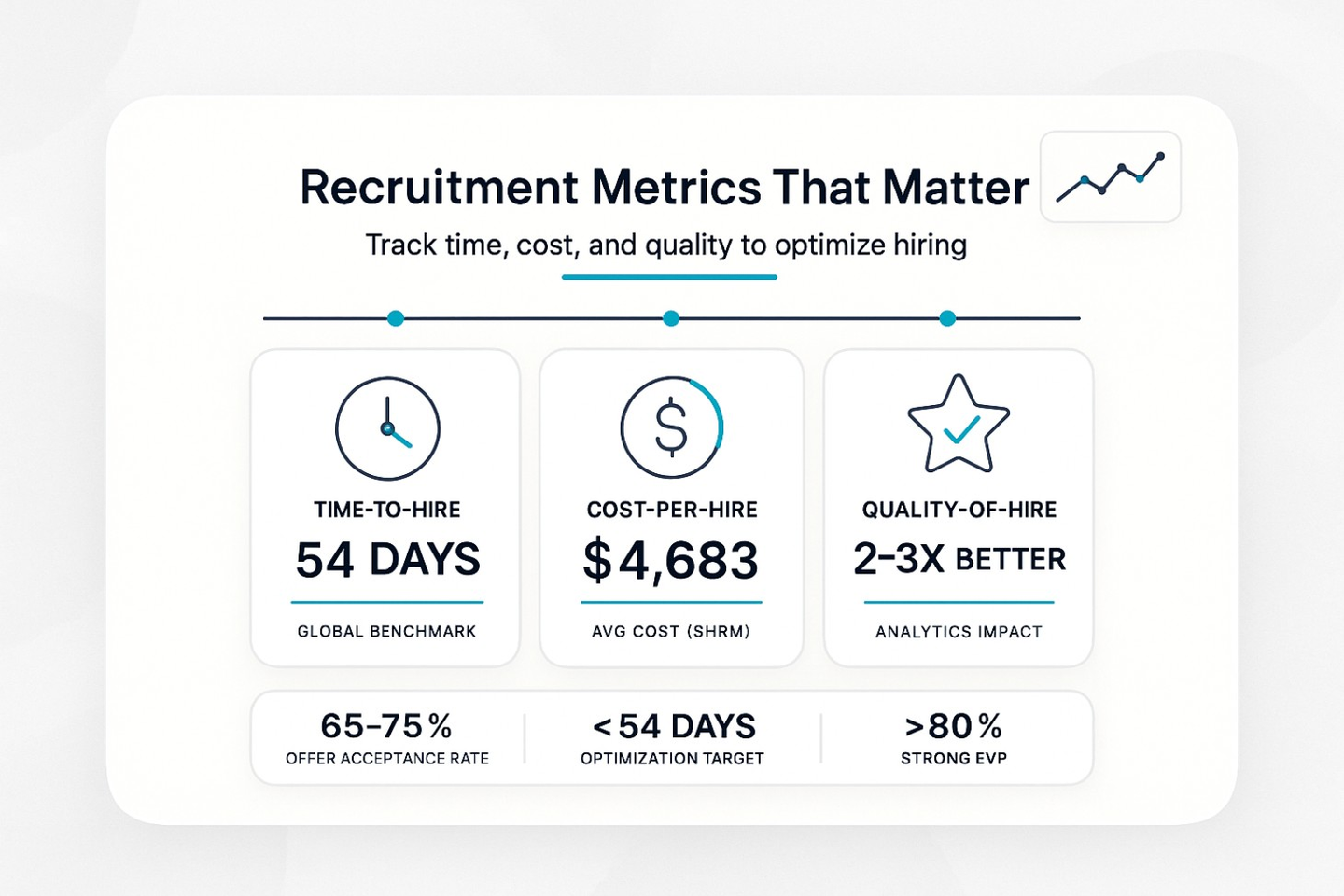
The three core recruitment metrics are time-to-hire, cost-per-hire, and quality-of-hire. According to SHRM, the global average cost-per-hire is approximately USD 4,683, though executive and technical roles can exceed USD 10,000 to USD 20,000. Organisations using analytics in recruitment achieve two to three times better results in hiring quality, time to hire, and employee retention.
Understanding these metrics enables HR teams to identify inefficiencies, justify technology investments, and demonstrate recruitment function value to organisational leadership.
Essential Recruitment KPIs
Each metric captures a different dimension of recruitment performance. Together, they provide a comprehensive view of hiring effectiveness.
Time-to-Hire measures the days from when a candidate applies until they accept an offer. This metric reflects your team's responsiveness and process efficiency in engaging qualified candidates.
Time-to-Fill covers the entire recruitment cycle from job requisition approval to offer acceptance. The global benchmark for non-executive roles is 54 days.
Cost-per-Hire calculates the total investment required to fill a position using the formula: (Internal Recruiting Costs + External Recruiting Costs) / Total Number of Hires. This metric helps organisations evaluate ROI on recruitment spending and identify optimisation opportunities.
Quality-of-Hire assesses whether new employees meet expectations through indicators like performance ratings, retention rates, and hiring manager satisfaction. This metric is the ultimate measure of recruitment success but requires longer-term tracking.
Benchmarking Your Recruitment Performance
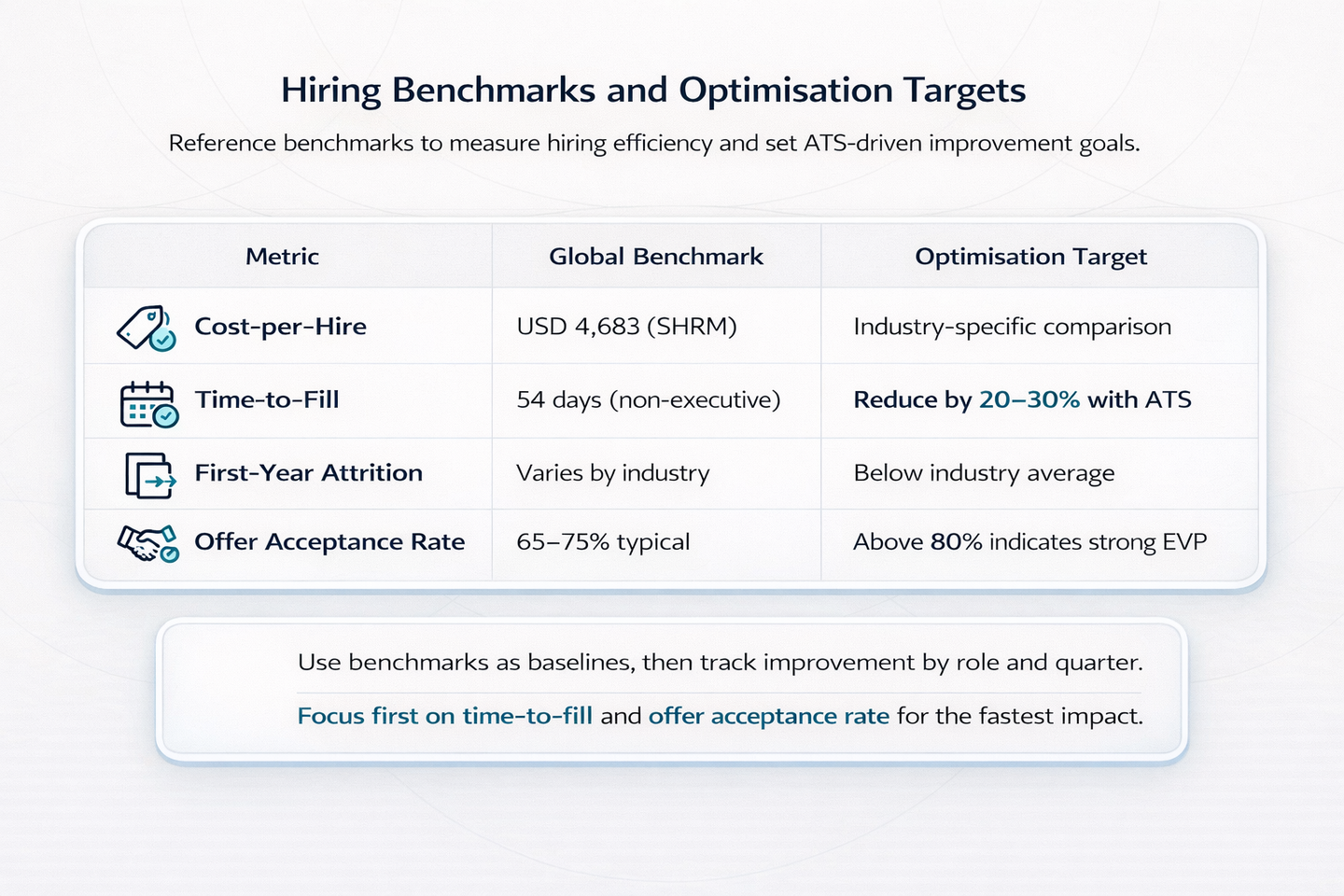
Effective benchmarking requires understanding both industry standards and your own historical performance. Tracking metrics over time reveals trends and the impact of process changes.
Key benchmarks include:
Cost-per-Hire
- Global benchmark: USD 4,683, according to SHRM.
- Optimisation target: Compare against your specific industry, role type, and hiring market.
Time-to-Fill
- Global benchmark: 54 days for non-executive roles.
- Optimisation target: Reduce time-to-fill by 20 to 30% through stronger ATS usage, improved workflow automation, and faster candidate communication.
First-Year Attrition
- Global benchmark: Varies by industry.
- Optimisation target: Keep first-year attrition below the relevant industry average by improving role fit, onboarding, and early employee engagement.
Offer Acceptance Rate
- Global benchmark: 65 to 75% is typical.
- Optimisation target: Aim for above 80%, which indicates a strong employee value proposition and an effective candidate experience.
Organisations should review metrics quarterly to identify trends without overreacting to short-term fluctuations. For high-volume hiring teams, monthly reviews help catch issues earlier.
Using Analytics to Optimise Source Channels
Not all candidate sources deliver equal value. Analytics enable organisations to identify which channels produce the best hires at the lowest cost, allowing strategic reallocation of recruitment spending.
Key analytical approaches include:
- Source effectiveness tracking: Measuring application volume, conversion rates, and eventual hire quality by channel
- Cost efficiency analysis: Calculating cost-per-hire by source to identify high-ROI channels
- Time comparison: Determining which sources produce candidates who move through the pipeline fastest
- Quality correlation: Connecting source data to performance outcomes and retention rates
Wantedly Hire's reporting capabilities allow organisations to analyze these dimensions without exporting data to spreadsheets. The platform supports flexible field and filter combinations, enabling customised analysis that matches specific organisational questions.
Building Your 2026 Hiring Strategy Checklist
A robust 2026 hiring strategy should prioritise five core areas: automation of repetitive tasks, structured interview implementation, analytics-driven optimisation, regulatory compliance, and retention-focused employer branding. Organisations that address all five areas systematically will outperform those making piecemeal improvements.
The following checklist provides a practical framework for HR leaders planning their 2026 recruitment approach.
Process Audit and Foundation
- Map current recruitment workflow from requisition to hire
- Identify time-intensive manual tasks (scheduling, communications, tracking)
- Calculate baseline metrics: time-to-hire, cost-per-hire, source effectiveness
- Document current compliance practices for FCF, WFA, and PDPA
Technology and Automation
- Evaluate ATS solutions against Singapore operational requirements
- Implement automated scheduling with calendar integration
- Configure workflow triggers for candidate communications
- Set up analytics dashboards for ongoing performance monitoring
Evaluation Standardisation
- Define competency frameworks for each role category
- Develop structured interview question banks
- Create scoring rubrics with clear evaluation criteria
- Train hiring managers on consistent interview practices
Compliance Integration
- Ensure 14-day MyCareersFuture posting processes for EP applications
- Review recruitment criteria for WFA protected characteristic compliance
- Implement PDPA-compliant data handling and retention policies
- Document fair consideration processes for potential MOM reviews
Employer Brand and Retention
- Articulate employee value proposition clearly in job postings
- Communicate total rewards beyond base salary
- Highlight flexible work policies and career development pathways
- Gather and respond to candidate experience feedback
Organisations can book a demo now to see how these strategic elements work together in practice within an integrated recruitment platform.
Key Takeaways and Next Steps
Singapore's 2026 hiring landscape rewards precision over volume. HR leaders who invest in recruitment automation, structured evaluation frameworks, and data-driven optimisation will secure top talent more effectively while maintaining compliance and controlling costs.
The market data is clear: with the Net Employment Outlook at +15%, nearly half of employers maintaining headcount, and economic uncertainty influencing hiring decisions, every recruitment investment must deliver measurable returns. Organisations cannot afford inefficient processes, inconsistent evaluations, or compliance gaps.
Critical success factors for 2026:
- Efficiency through automation: Reduce time spent on scheduling and coordination by up to 80%
- Quality through structure: Implement standardised interviews that predict job success twice as effectively as unstructured approaches
- Insight through analytics: Track metrics that reveal optimisation opportunities and demonstrate recruitment ROI
- Protection through compliance: Build FCF, WFA, and PDPA requirements into standard processes rather than treating them as afterthoughts
- Advantage through speed: Engage qualified candidates faster than competitors to secure top talent
The organisations that thrive in 2026's selective hiring environment will be those that treat recruitment as a strategic function deserving systematic investment rather than an administrative task to minimise. Modern ATS platforms like Wantedly Hire provide the foundation for this transformation, combining automation, structured evaluation, and analytics in a unified system designed for Singapore's unique requirements.
Wantedly Hire is an application tracking system optimised for modern hiring practices. Experience seamless hiring with tailored workflows designed to align with your recruitment structure, automated interview scheduling, and actionable insights to optimise hiring performance!
Sign up for a demo and enjoy a limited-time discount on your subscription.
/assets/images/7053115/original/43c7433b-4920-4cf1-b0b0-c44aec7bd947?1624242511)


)/assets/images/7053115/original/43c7433b-4920-4cf1-b0b0-c44aec7bd947?1624242511)

/assets/images/21128915/original/43c7433b-4920-4cf1-b0b0-c44aec7bd947?1747371924)