How To Build Your Recruitment Funnel And Track Your Hiring Costs Easily With Robust Data Metrics

A Complete 2026 SME Guide
Recruitment is one of the most significant investments for any growing business. For small and medium enterprises (SMEs), hiring the right people efficiently can mean the difference between scaling successfully and struggling with costly turnover. Yet many organisations still approach recruitment in an ad hoc way, which makes it difficult to see where candidates drop out, how much each hire actually costs, or which channels deliver the best results.
That is where building a structured recruitment funnel and tracking hiring costs with robust data metrics becomes critical. This guide explains how to build your recruitment funnel and track your hiring costs easily with robust data metrics, using simple but effective tools that SMEs can manage without needing a large HR team. It also highlights how Wantedly Hire supports companies with accessible analytics dashboards and customised careers pages that improve visibility, candidate engagement, and hiring efficiency.
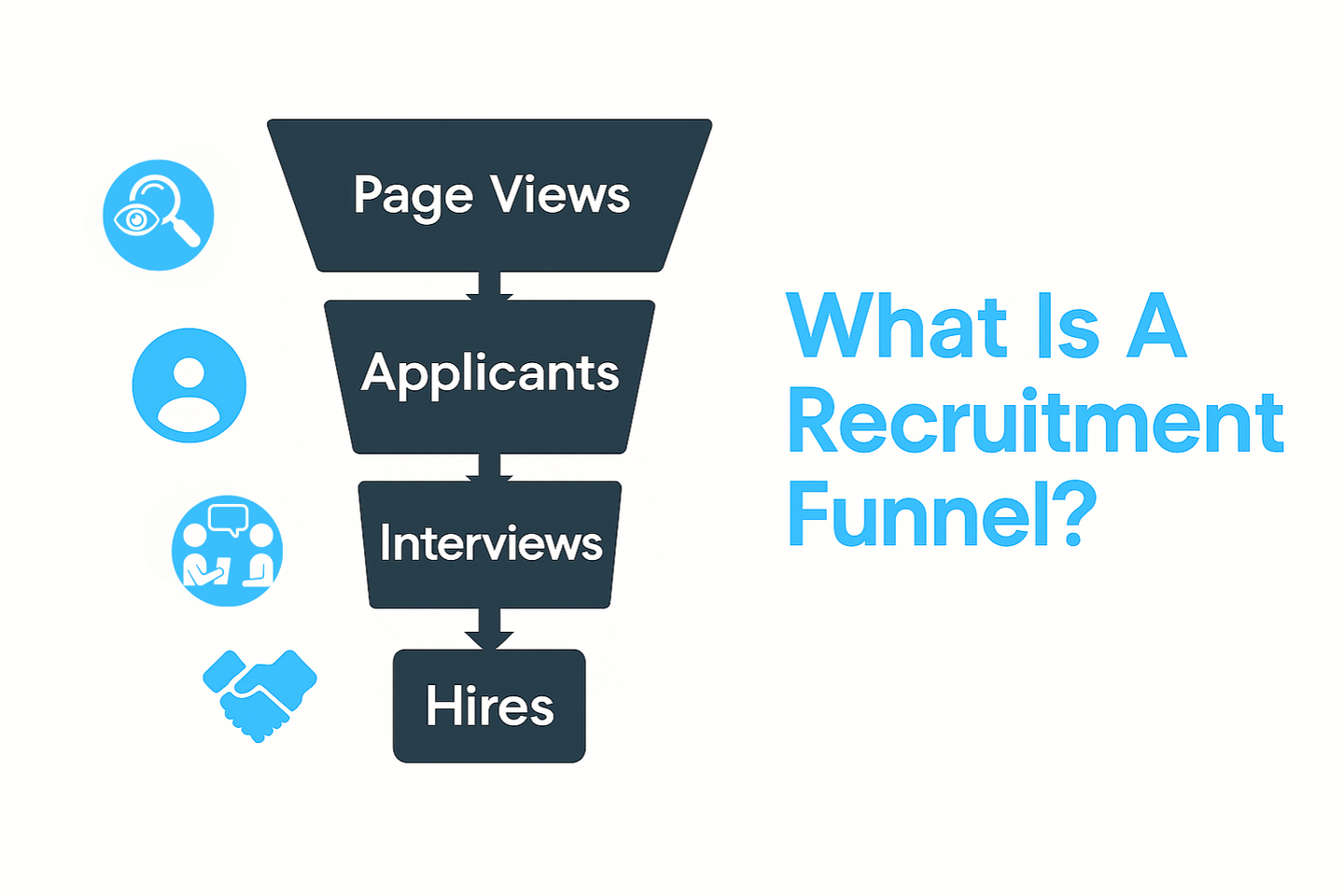
What Is A Recruitment Funnel And Why Does It Matter For SMEs in Singapore And Southeast Asia?
A recruitment funnel is the structured process that takes candidates from awareness of your company through to the final hiring decision. Just like a sales funnel, it narrows as people progress through each stage. For SMEs in Singapore and across Southeast Asia, this matters because talent competition is high and resources are limited. Without a funnel, recruitment becomes unpredictable and costly. With a funnel, SMEs can control visibility, measure efficiency, and optimise branding from the very first stage.
A clear recruitment funnel allows SMEs to:
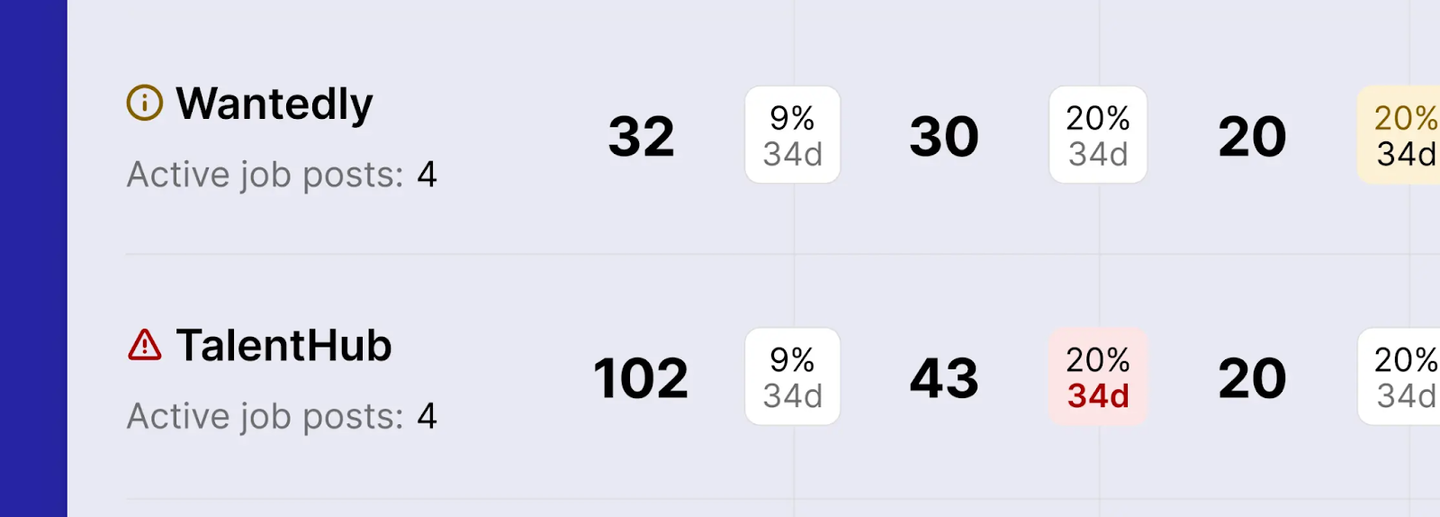
- See where candidates drop off. By tracking engagement metrics such as page views and applicants in Wantedly Analytics, businesses can identify bottlenecks early.
- Measure the efficiency of sourcing channels. Traffic source data shows whether awareness is coming from job postings, social media, or direct referrals.
- Optimise employer branding at the top of the funnel. With Wantedly’s customised careers pages, SMEs can ensure their brand story resonates from the very first touchpoint.
- Allocate resources where they have the greatest impact. Knowing which stage consumes the most time or money ensures smarter investment in recruitment.
If you are starting from scratch, mapping your funnel in a simple diagram can already highlight gaps. Combine this with metrics from Wantedly Hire’s dashboards, and the funnel becomes not only a process but also a measurement system.
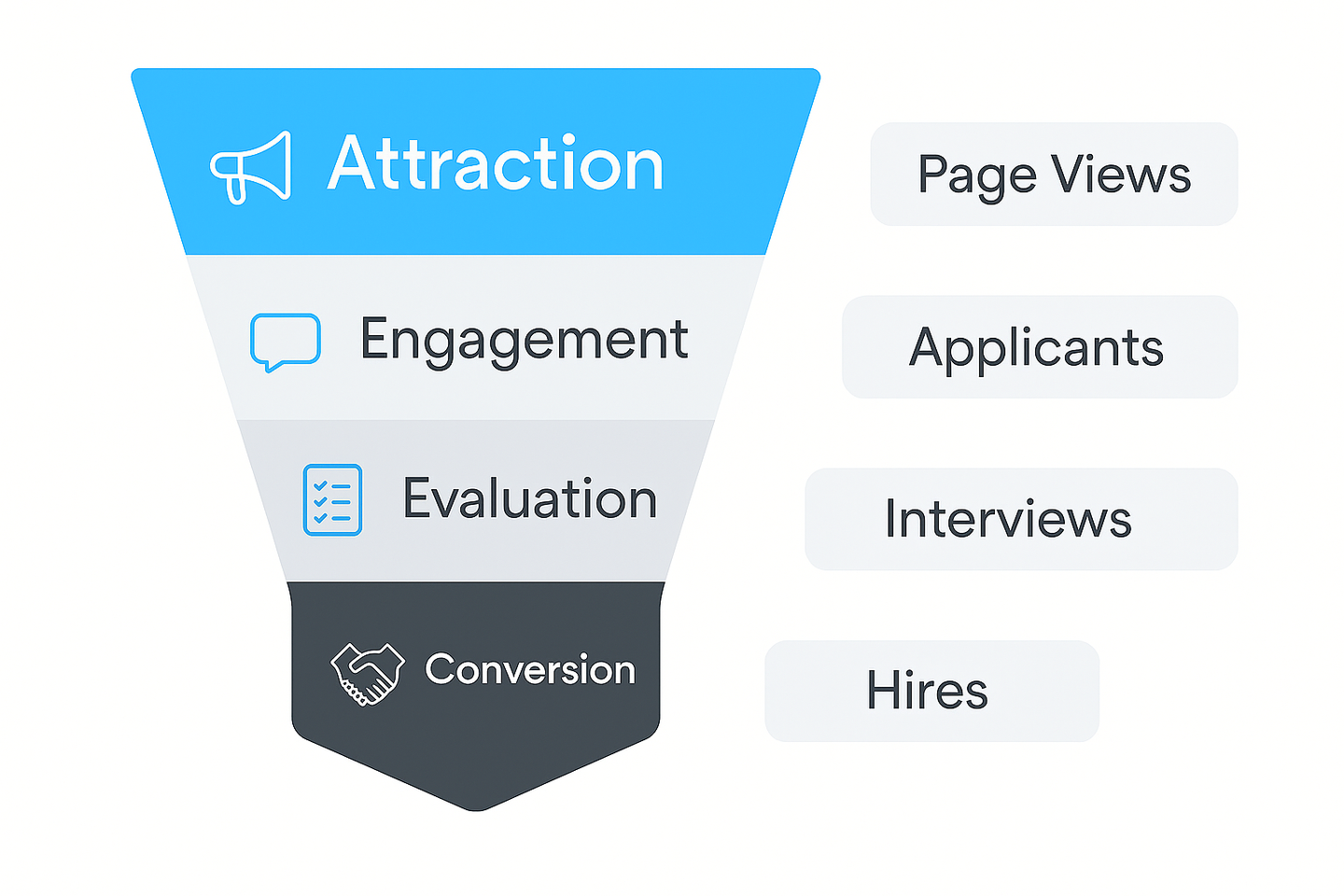
Which Recruitment Funnel Stages Should SMEs Prioritise First?
Not all businesses need a highly complex funnel. For SMEs, keeping the process straightforward and measurable is the most effective approach. The key stages are:
Attraction: Building Awareness And Visibility
At this stage, the goal is to make potential candidates aware of your company and open roles. Employer branding plays an important role here. With Wantedly Hire, SMEs can create and manage a branded careers page powered by Wantedly Hire to showcase their culture, values, and opportunities in a professional way that appeals to candidates.
Think of this as your “shopfront”. Candidates often browse multiple job boards before deciding where to apply, and it is also common practice for career advisors and mentors to recommend talents to apply directly through an employer’s careers page. Having this set up in Wantedly Hire, therefore, gives SMEs a clear advantage in attracting quality applicants.
Engagement: Turning Interest Into Applications
Once candidates are aware of your company, the next challenge is to encourage them to apply. With Wantedly Hire’s Analytics Reports, SMEs can track company and job page views, applicant numbers, and performance by source. The platform also allows you to customise and standardise reasons for rejection or withdrawal, making it easier to spot patterns and refine messaging. A healthy ratio of applications to page views signals strong engagement, while a drop-off highlights the need to adjust your job descriptions or company profile.
Evaluation: Screening And Interviewing
This stage ensures that only qualified candidates move forward. Wantedly Hire makes it easier with automatic interview scheduling that lets you set availability across multiple interviewers and share a single scheduling link. You can also use default automated workflows to send out scheduling links or emails with just one click. On top of that, the platform allows you to customise interview steps and criteria, standardise evaluations, and get started quickly with sample hiring criteria and interview questions for 12 common job types.
Conversion: Making Offers And Securing Acceptance
The final stage is about turning shortlisted candidates into hires. Wantedly Hire supports this with centralised candidate management and the All-in-One toolkit: calendar invite templates, communication templates, tasks, access permissions, Slack notifications (20+ types), talent pool, and integrations (Google Workspace, Teams/Outlook, CSV imports). These help teams stay aligned and move quickly from offer to acceptance.
These features keep hiring teams aligned and help them move quickly from offer to acceptance. With a subscription model that includes unlimited job postings and hires, SMEs can also scale recruitment without worrying about unpredictable platform costs.
Which Recruitment Metrics Should SMEs Track To Improve Hiring Decisions?
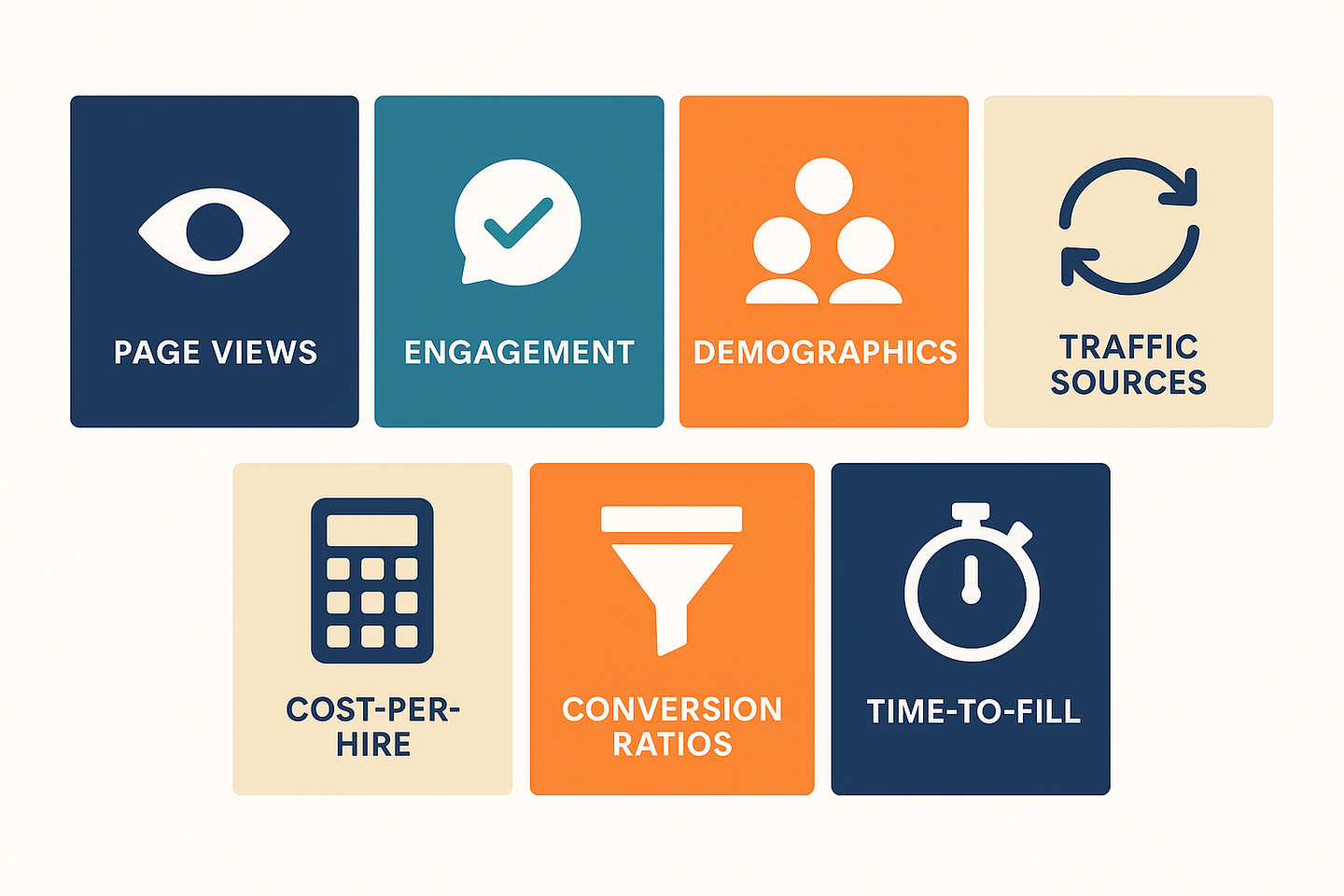
SMEs should focus on a small set of metrics that balance practicality with insight:
Metrics available through Wantedly Hire’s Analytics dashboards:
- Company Page Views (PVs): A measure of how many people visit your company page. This shows top-of-funnel visibility.
- Job Post Engagement: Includes views, applicants, and shares for active job posts. It highlights how compelling your job ads are.
- Audience Demographics: Provides insights into the occupations and age groups of your visitors, helping you assess whether the right candidates are being reached.
- Traffic Sources: Shows whether candidates find you through direct links, social media, referrals, or other channels.
Metrics tracked manually:
- Cost-per-hire: The total cost invested in recruiting divided by the number of hires.
- Funnel conversion ratios: The proportion of candidates who move from one stage to the next.
- Time-to-fill: The number of days required to complete the hiring of a role.
This combination gives SMEs enough visibility to improve decisions without overwhelming them with data.
How To Track Hiring Costs Without A Complex System
Hiring costs can spiral if not tracked carefully. For SMEs, a simple manual calculation is usually enough to provide clarity. Consider running this calculation quarterly alongside Wantedly Hire’s Analytic Reports, which give you data on company and job page views, applicant numbers, and performance by source. This helps you see how branding and traffic improvements translate into reduced cost per hire.
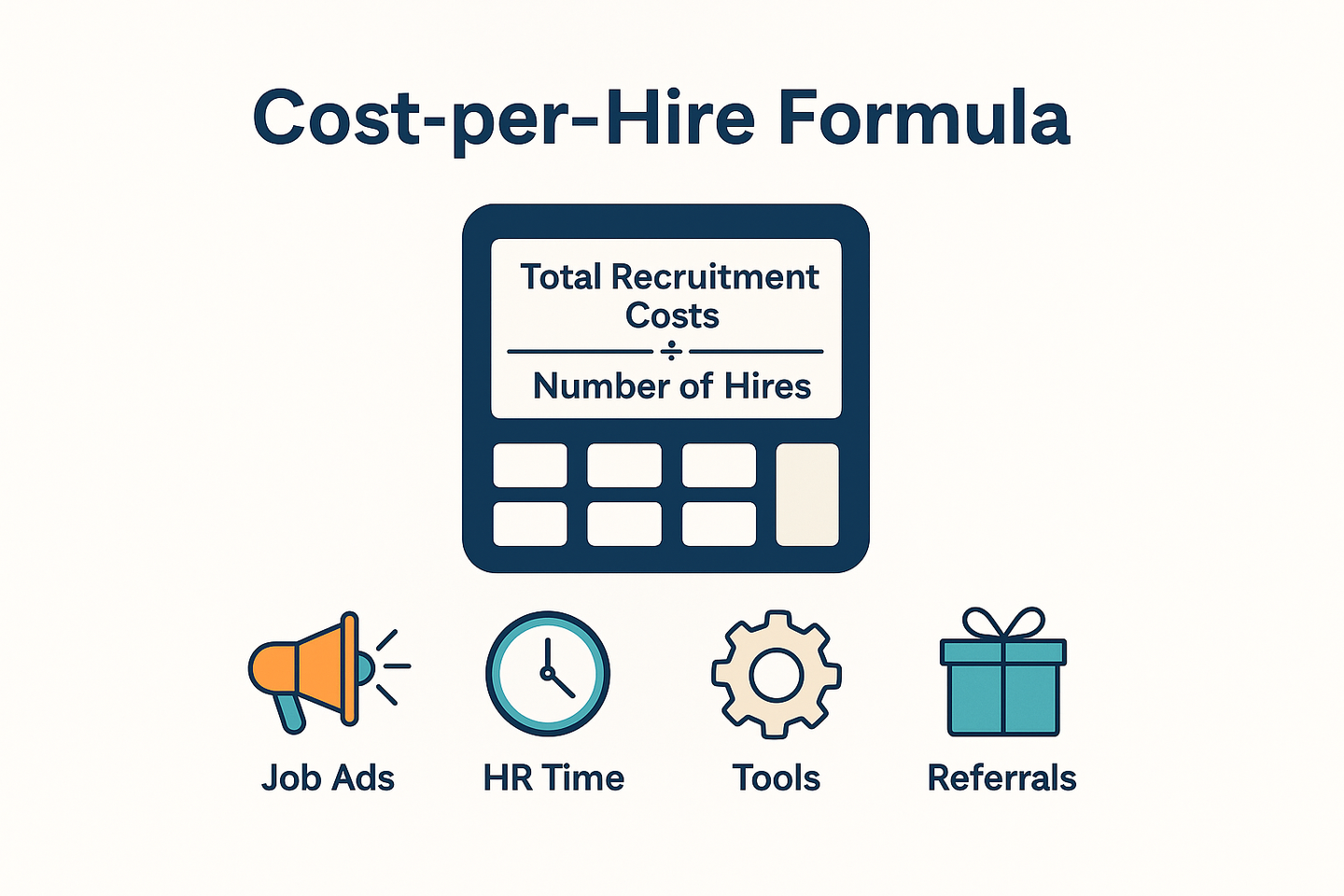
Cost-per-hire formula:
Total recruitment costs ÷ Number of hires in a given period
Recruitment costs may include:
- Job advertising spend.
- Recruiter or HR staff time (estimated hourly rate multiplied by hours spent).
- Recruitment tools and subscriptions.
- Referral bonuses or incentives.
With data from Wantedly Hire, SMEs can monitor funnel performance more effectively and link hiring activity to overall cost efficiency.
Building An SME Ready Dashboard With Wantedly Data
SMEs do not need an advanced business intelligence platform to monitor hiring effectively. A simple approach can work when everything is already available in Wantedly Hire.
- Use Analytics Reports: Track company and job page views, applicant numbers, performance by source, and standardised reasons for rejection or withdrawal, all directly inside Wantedly Hire.
- Monitor progress through the funnel: See how candidates move from application to screening, interviews, and offers, with data centralised in one system.
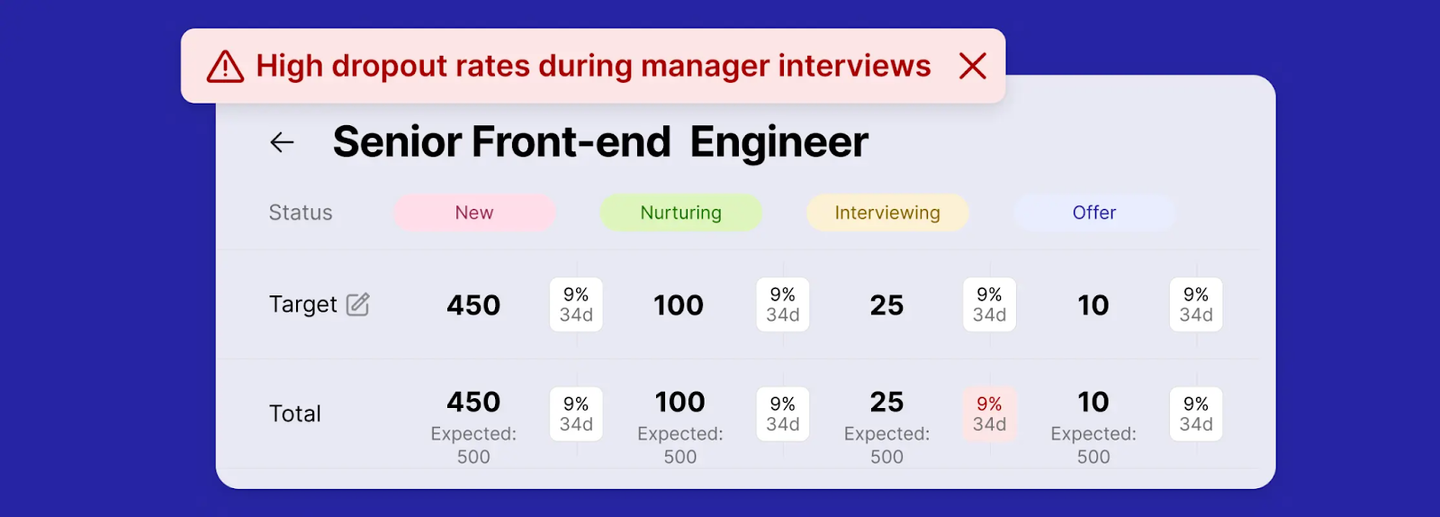
- Review regularly: Spot bottlenecks, such as high page views but few applicants, or roles that take longer to fill.
- Adjust strategies: If analytics show most applicants come from a particular source, you can refine your hiring focus to double down on what works.
Everything lives in Wantedly Hire’s dashboards and workflows, so SMEs maintain visibility without adding extra tools or complexity.
Why Employer Branding Is The First Step In Reducing Recruitment Costs
Strong employer branding ensures that the right candidates are attracted from the beginning, which improves funnel efficiency and reduces wasted time.
With Wantedly Hire, SMBs can create and manage a branded careers page within the Wantedly platform to:
- Showcase company culture and values consistently across all roles.
- Provide candidates with a clear and professional experience from the first touchpoint.
- Stand out in a competitive market by presenting a distinct employer identity.
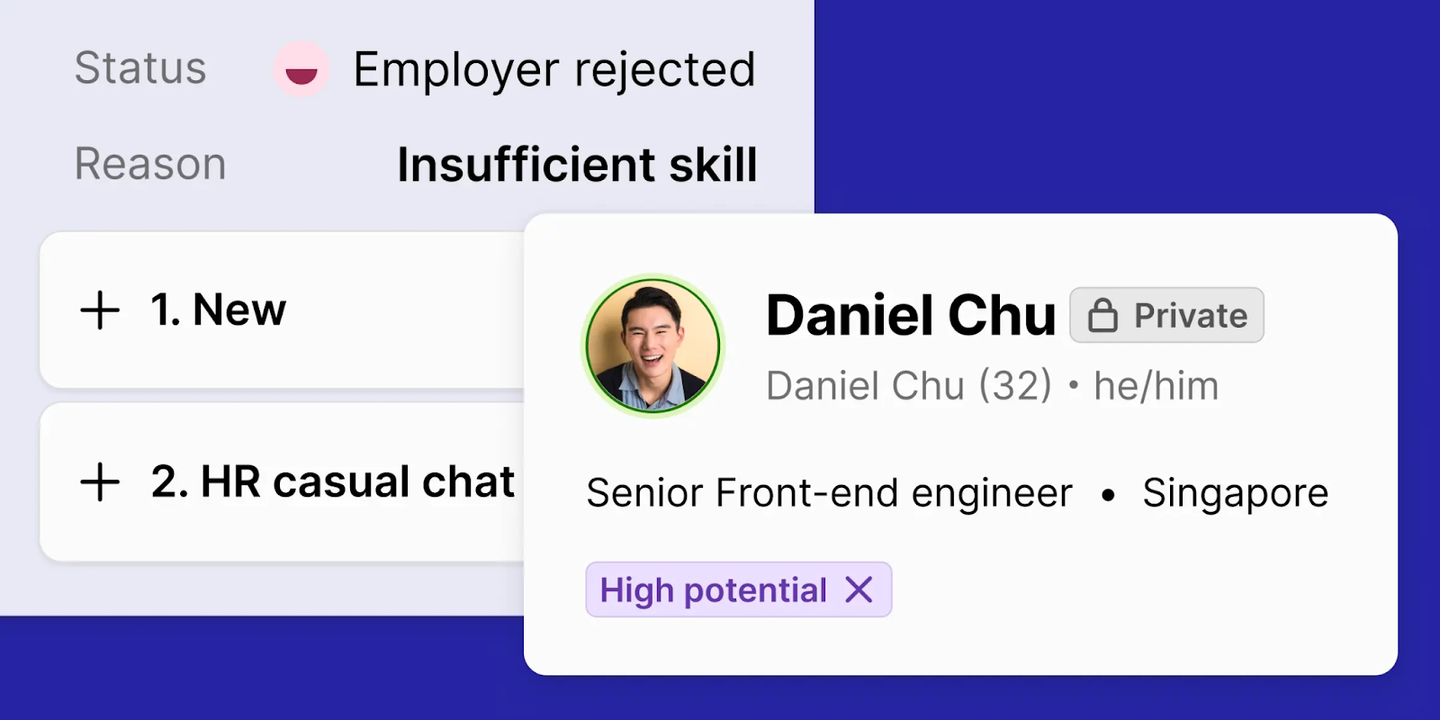
Better branding at the attraction stage leads to higher-quality applicants, which means less time filtering unsuitable candidates and ultimately lower costs per hire. Combined with engagement data from Wantedly Hire’s Analytics Reports, companies can see whether branding changes directly influence traffic and applicant numbers.
Reviewing these metrics regularly makes it clear if updates to your careers page are attracting more applicants and shares, showing that your investment in branding is paying off.
Common Mistakes SMEs Make When Tracking Recruitment Metrics
Many Small and Midsized Businesses fall into the trap of tracking the wrong things or failing to link metrics back to business goals.
- Focusing only on vanity metrics: Counting page views or total applicants without checking if they are relevant for the role.
- Ignoring demographic fit: Overlooking whether the right types of candidates are engaging with your job posts.
- Skipping funnel ratios: Without conversion ratios, it is difficult to identify where candidates are being lost.
- Not reviewing data regularly: Waiting until hiring challenges escalate instead of making monthly adjustments.
Each of these mistakes can be corrected by using the built-in dashboards of Wantedly Hire as a foundation, then layering manual calculations to complete the picture.
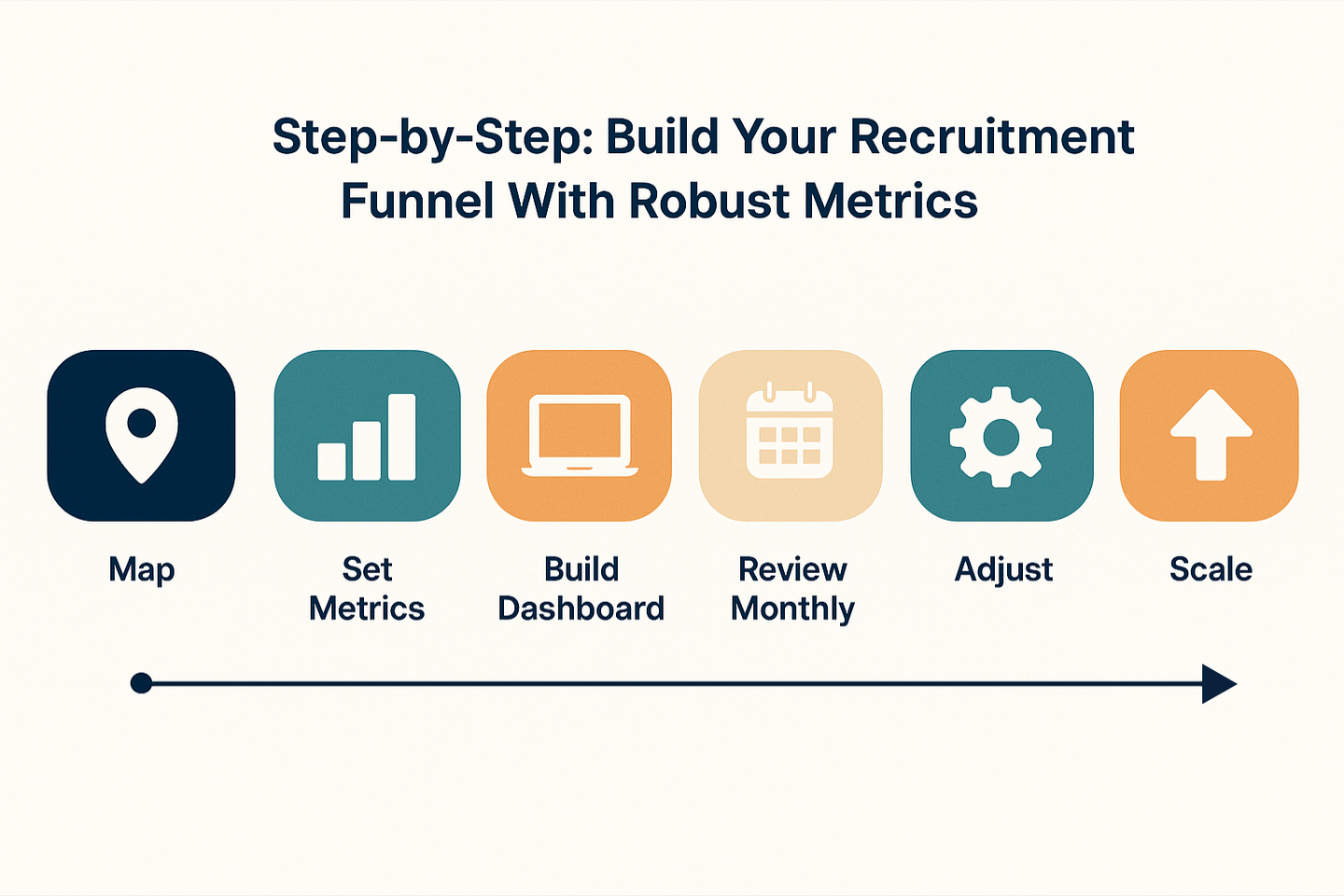
Step-By-Step Guide: How SMEs Can Build A Recruitment Funnel With Robust Metrics
- Map the funnel stages: Define Attraction, Engagement, Evaluation, and Conversion clearly, and manage each stage directly in Wantedly Hire’s workflows.
- Set core metrics: Use Analytics Reports to track page views, applicants, shares, audience demographics, traffic sources, and standardised reasons for rejection or withdrawal.
- Build your dashboard: With all data centralised, SMEs can view funnel performance, monitor applicant flow through each stage, and review engagement trends without switching tools.
- Review monthly: Identify weak points, such as high page views but low applicant conversion, or roles where candidates frequently withdraw.
- Adjust sourcing and branding: Use demographic and source insights from Analytics to refine job postings and focus efforts where the right candidates are coming from.
- Scale with confidence: As hiring needs grow, Wantedly Hire’s subscription model with unlimited postings and hires ensures the system scales without added cost or complexity.
You can start small: even logging your first month of data in Wantedly Hire’s dashboards will highlight where improvements are needed.
If you want to see how metrics like page views, applicants, and traffic sources can be tracked in one place, explore the Analytics dashboards available in Wantedly Hire. They give SMEs the visibility to improve candidate engagement without adding extra tools.
How Recruitment Data Trends Are Evolving In 2025 - 2026
The importance of recruitment analytics is set to grow further as labour markets continue to tighten. Recent surveys show that 79% of HR leaders plan to increase investment in recruitment technology in 2025 and beyond, while SMEs in Asia report that rising hiring costs remain among their top three operational challenges into 2026.
At the same time, candidates expect more transparency and a stronger employer brand presence online. This makes metrics such as page views, engagement rates, and demographic insights increasingly valuable. By monitoring these data points through Wantedly Hire’s Analytics Reports, SMEs can adjust their messaging and recruitment strategies with greater precision.
Looking at 2026, the industry trend is moving toward AI-driven analytics and predictive insights. While these are still emerging, SMEs that prepare now by building clear funnels and robust metrics in Wantedly Hire will be well-positioned to integrate more advanced recruitment intelligence as it becomes available.
FAQs
1. Does Wantedly Hire track cost-per-hire automatically?
Wantedly Hire gives SMEs the recruitment data they need to calculate cost-per-hire effectively. Through Analytics Reports, you can access page views, applicant numbers, shares, demographics, traffic sources, and standardised reasons for rejection or withdrawal. By combining these insights with your recruitment expense records, you can work out cost-per-hire for any given period. Because Wantedly Hire’s subscription includes unlimited job postings and hires, SMEs also benefit from predictable platform costs as hiring scales.
2. How can SMEs in Singapore or Southeast Asia calculate funnel conversion ratios?
Wantedly Hire tracks candidate progress through each stage of the funnel, from application to screening, interviews, and offers. SMEs can use this stage-by-stage data to calculate conversion ratios such as application-to-interview or interview-to-offer. For example, if 50 applicants apply and 10 reach the interview stage, the conversion ratio is 20 per cent. Having all candidate data centralised in Wantedly Hire makes these calculations straightforward and reliable.
3. What recruitment data does Wantedly Hire provide directly in its dashboards?
Wantedly Hire's Analytics Reports surface the key recruitment signals you need to manage hiring like a measurable process, including company page and job post page views, job post engagement metrics such as views, applicants and shares, traffic sources showing where candidates come from, audience breakdowns such as occupations and age groups, and standardised tracking of rejection and candidate withdrawal reasons so you can spot patterns and improve both sourcing and selection decisions over time.
4. How often should SMEs in Singapore review their recruitment data?
A monthly review is a practical cadence for SMEs using Wantedly Hire. This timeframe provides enough data to identify patterns while still allowing quick adjustments. In fast-moving markets like Singapore and Southeast Asia, using Wantedly Hire dashboards regularly helps ensure sourcing channels stay efficient and recruitment decisions remain cost-effective.
Conclusion
Building a structured recruitment funnel and tracking hiring costs with robust metrics is achievable even for SMEs with limited resources. With Wantedly Hire’s Analytics dashboards, businesses gain clear visibility into performance, reduce wasted effort, and strengthen their employer branding.
If your organisation in Singapore or Southeast Asia is ready to make hiring both more efficient and more measurable, start with Wantedly Hire’s branded careers page within the Wantedly platform and its Analytics tools. Together, they provide the foundation to build a recruitment funnel that delivers consistent ROI while remaining simple to manage.
Key Takeaways
- A recruitment funnel provides structure and clarity for SMEs.
- Wantedly Analytics tracks page views, applicants, shares, demographics, and traffic sources.
- Cost-per-hire, funnel conversion ratios, and source-to-hire must be calculated manually.
- Employer branding through a customised careers page strengthens attraction and reduces costs.
- Regular monthly reviews ensure data translates into actionable improvements.
Wantedly Hire is an application tracking system optimised for modern hiring practices. Experience seamless hiring with tailored workflows designed to align with your recruitment structure, automated interview scheduling, and actionable insights to optimise hiring performance!
Sign up for a demo and enjoy a limited-time discount on your subscription.
/assets/images/7053115/original/43c7433b-4920-4cf1-b0b0-c44aec7bd947?1624242511)


)/assets/images/7053115/original/43c7433b-4920-4cf1-b0b0-c44aec7bd947?1624242511)

/assets/images/21128915/original/43c7433b-4920-4cf1-b0b0-c44aec7bd947?1747371924)