
A Practical Small Medium Enterprise Model
If you are weighing an applicant tracking system for your company's digital transformation, the real question is not whether automation helps but whether the system can pay for itself within a timeframe your finance team will accept. This guide gives hiring managers a practical, decision-ready look at the cost and benefit analysis for using Wantedly Hire.
You will see which costs actually matter, the three ROI levers that Wantedly Hire can genuinely move, how to build an auditable model your CFO can trust, and a 30-day validation plan that you can run without heavy rollout. The key idea is simple: when your entire recruitment flow, communication, scheduling, and feedback happen in one place, you reclaim time that translates directly into faster hires and measurable returns.
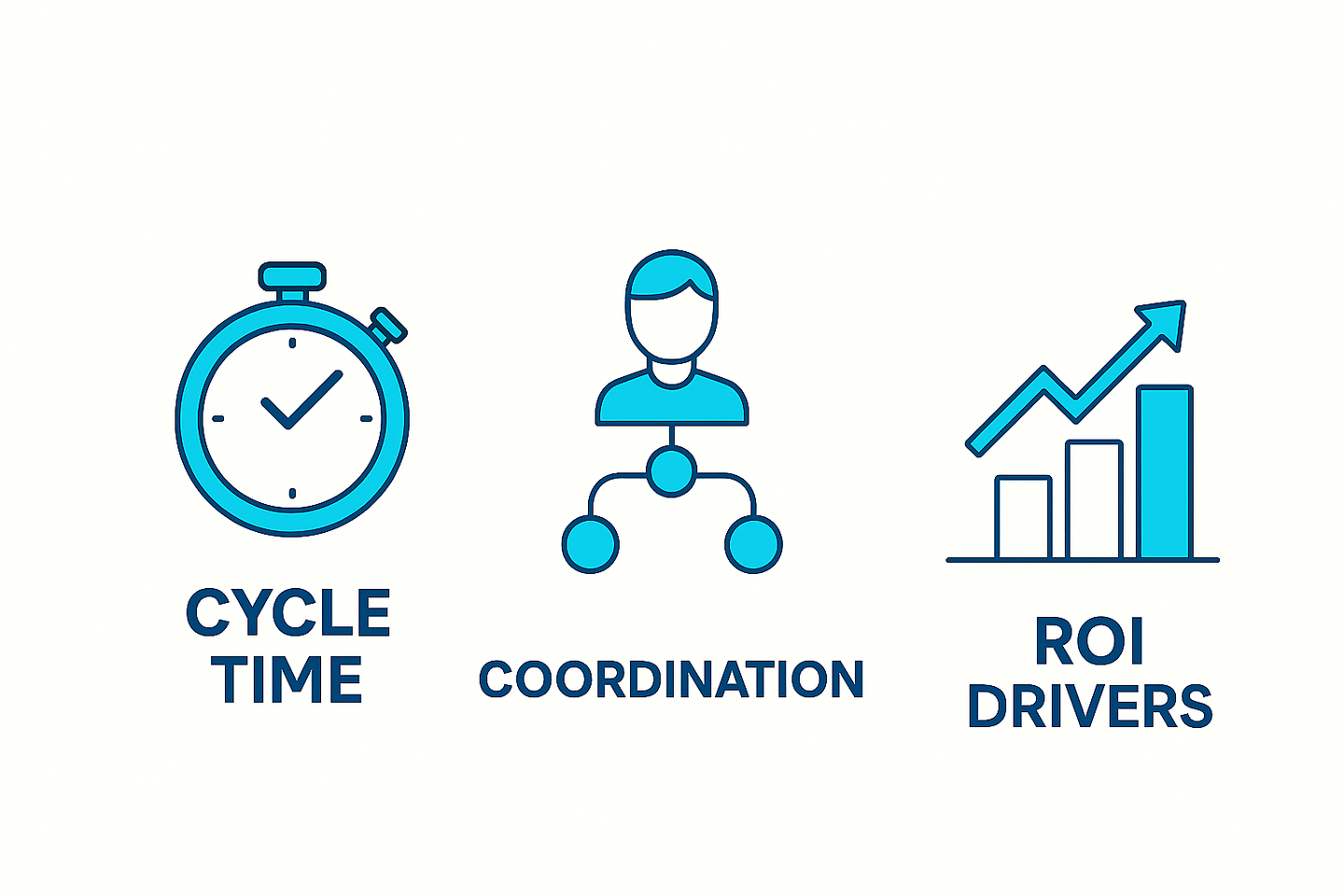
What Is The 2026 Hiring Context That Makes Cycle Time And Coordination The Core ROI Drivers?
In the Year of the Fire Horse, it is clear that hiring across Singapore and much of the region remains tight. Vacancies stay open longer, and qualified candidates often accept offers within days. For lean teams, speed and clarity determine who wins top talent.
An ATS that helps compress time to interview, standardise reviews, and deliver weekly actionable insights is not just convenient but a genuine performance lever. Small, repeatable time savings from improved scheduling, fewer duplicate screenings, and smarter focus on high-yield sources quickly add up. Each minute your SMB saves keeps candidates engaged and shortens time-to-fill across the board.
Try this: Pull your last three roles and check how many days passed between “application received” and “first interview.” If that number surprised you, you are exactly who this model is built for.
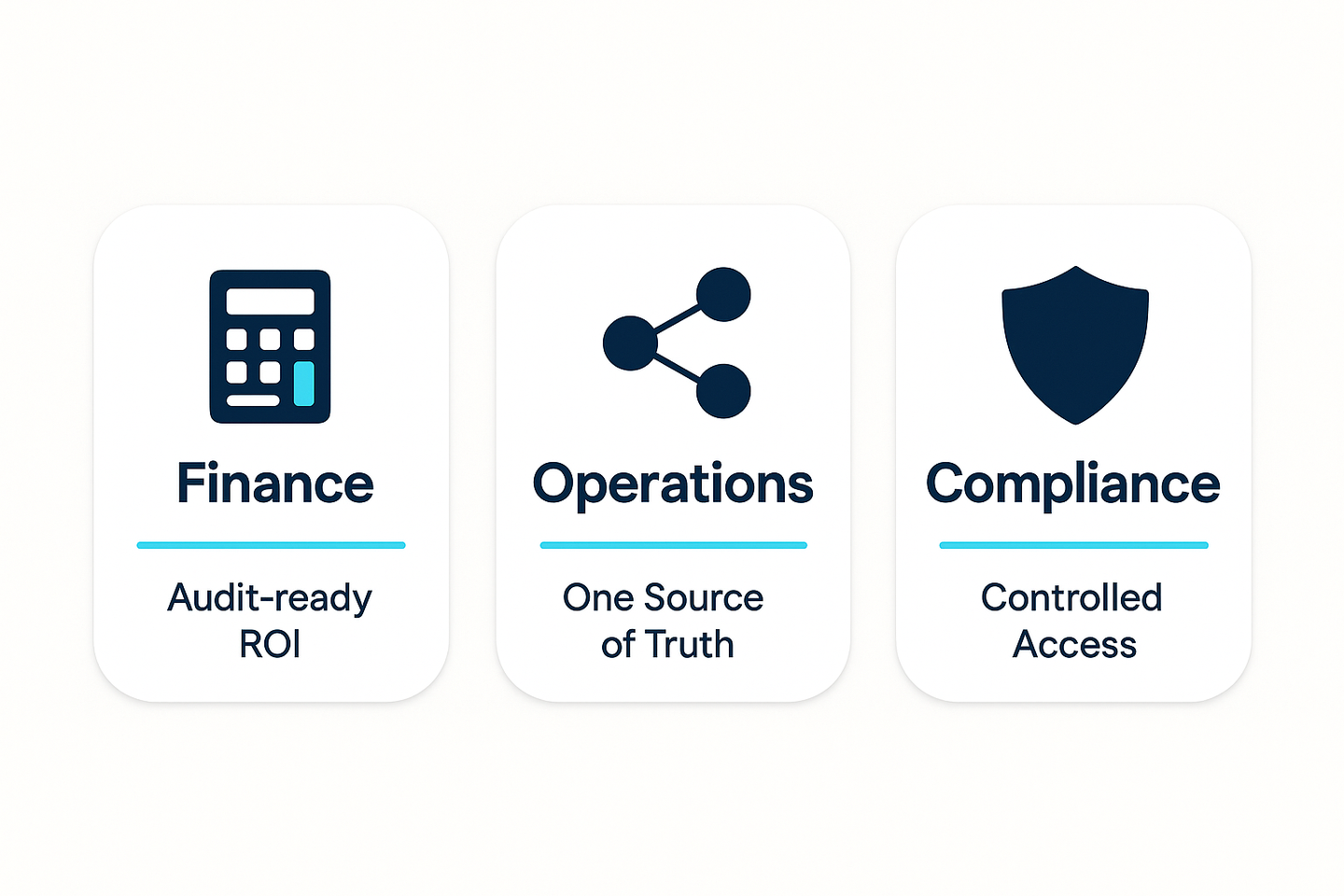
Why Does This ATS Business Case Matter For Finance, Operations, And Compliance?
Finance cares about proof, not promises
Think in hours and days rather than adjectives. When interviews are scheduled directly from the candidate thread and automatically added to calendars, coordination time drops significantly. When all conversations happen inside Wantedly Hire, no one wastes time digging through inboxes to piece together updates. Consistent use of labels and closed states prevents repeated screening. When Insights show which sources perform best, your team spends effort where it converts. Add those up, and payback becomes a calculation your CFO can verify.
Operations just wants one place to work
Hiring runs more smoothly when your ATS becomes the system of record and the busywork is handled through automation, not extra coordination. In Wantedly Hire, interview scheduling is designed to reduce the back-and-forth by automatically finding an ideal slot using AND or OR conditions across multiple interviewers, then letting you send a scheduling link to the candidate. Wantedly Hire positions this as cutting scheduling time by up to 80%.
From there, automation keeps the process moving without constant chasing. Automated reminders help teams stay on top of a large pipeline, and default workflows let recruiters trigger scheduling links or stage emails with a single click as candidates progress. Reviewers see the same statuses, messages, and decisions in one place, while Slack notifications can push updates to where the team already works, so fewer things rely on manual check-ins.
Compliance needs clear lines and visibility
Good controls should be built in, not bolted on. In Wantedly Hire, you can assign account types and permissions so each user sees only what they should. You can also document what happens when a paid plan ends and include that note in your risk section. With scoped access and predictable lifecycle rules, reviews and renewals are easier to manage.
Before building your ROI model, run one live scheduling flow from the candidate thread and time it. That single proof point helps finance see exactly where the ROI begins. If you need help turning this into a repeatable process, schedule a consult with the Wantedly Hire team and walk through your current stages, permissions, and interview flow together.
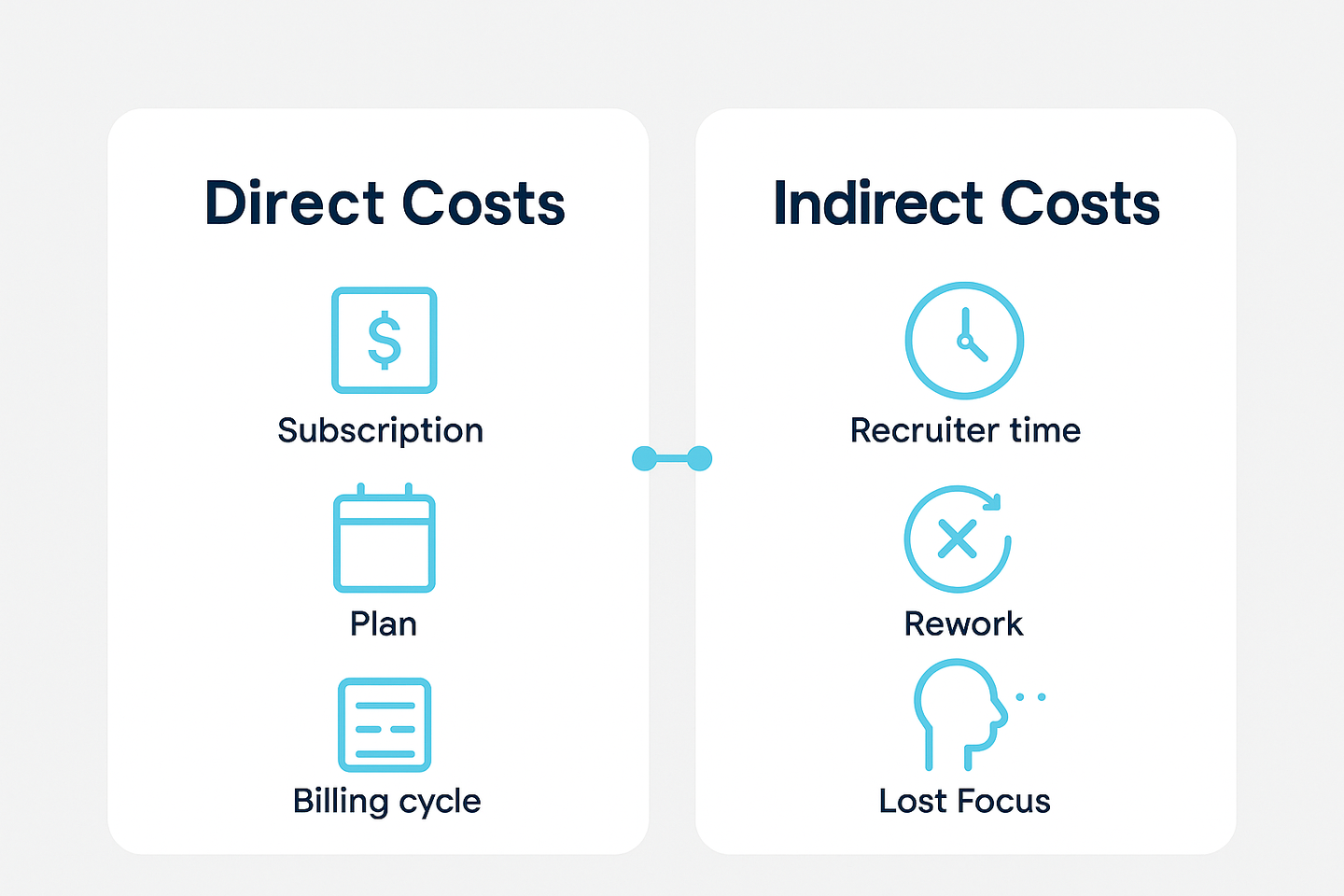
Which Costs Actually Matter When Building A CFO-Ready Case?
To make your case solid, divide costs into two groups: direct and indirect.
Direct costs are straightforward: your subscription plan, number of seats, and the billing cycle. Include what happens if a plan ends or changes, so there is no surprise to access or visibility later.
Indirect costs are where real efficiency gains appear. These include recruiter time lost coordinating interviews through long email chains, hiring manager time spent chasing context across spreadsheets, and rework from inconsistent candidate statuses. Add to that the unseen cost of attention wasted on poor-performing channels that go unchecked because Insights were not reviewed mid-month.
When pricing your model, use loaded hourly costs for recruiter and hiring manager time, and assign a daily value to a filled revenue-bearing role. List every input transparently so finance can audit it line by line.
Try a small test first. Run a one-role pilot using Wantedly Hire’s on-platform email and Scheduling tool, then measure recruiter minutes saved per interview cycle. Real numbers build credibility fast.
What Are The Three ROI Levers That Wantedly Hire Can Credibly Move For SMEs?
1. Compress the path from application to interview
Most delays occur between initial contact and the first meeting. Wantedly Hire centralises the conversation so recruiters can propose times directly from the candidate thread. Once confirmed, the interview syncs to Google Calendar and Teams and appears on the dashboard. You will send fewer messages, lose less context, and cut days from the first-interview timeline.
2. Reduce rework with consistent labels and closed states
Rework slows hiring velocity. When reviewers apply the same labels and close states, the system prevents duplicate screening and clarifies ownership. Candidates either progress or close cleanly, and everyone sees the same next step. That discipline keeps interviews focused and shortens your overall hiring cycle.
3. Redirect effort using weekly insights
Wantedly Hire’s dashboard highlights data on post performance and source quality, allowing you to double down on what converts and stop what does not. Reviewing those numbers weekly rather than at month-end lets your team pivot early instead of wasting time on low-yield channels.
Test it yourself. Schedule one interview this week directly inside the candidate message thread and compare the minutes saved to your usual inbox coordination.
How Do You Build A Model That Finance Will Actually Trust?
CFOs usually look for three things: payback months, breakeven hires, and a simple, conservative NPV style view. The more transparent your logic is, the easier it is for them to trust the model.
Start by capturing these inputs that Wantedly Hire can directly influence:
- Hiring volume by role and quarter
- Baseline time to first interview and interviews per hire
- Recruiter and hiring manager hourly costs
- Expected minutes saved per interview using on on-platform scheduling and email
- Reduction in repeat screening through mandatory labels and closed states
- Subscription cost and number of seats
Then calculate, step by step:
- Minutes saved × interviewed candidates = recruiter hours saved
- Fewer interview rounds × average reviewer time = hiring manager hours saved
- Days saved to first interview × daily role value = timing benefit
Add these benefits together, subtract the subscription cost, and you have a net benefit.
From there, you can compute payback months and a simple ROI figure.
Summarise the results in three scenarios, using the same logic but different assumptions:
- Conservative
- Expected
- Stretch
Include a short risk note that mentions plan lifecycle and early adoption assumptions, so finance can see where you have been cautious.
To keep the model honest over time, add a “Live Inputs” section that you update with pilot metrics from Wantedly Hire. This keeps discussions focused on your own data rather than generic benchmarks.
If you want to ground every input in a specific feature, build your sheet with the Wantedly Hire ATS overview open in another tab and, once your first version is ready, book a short product demo to walk through your model and validate that each assumption reflects how Wantedly Hire actually works.
What Does A Conservative Worked Example Look Like?
A 60-person Small and Midsize Business plans 10 hires over 12 months. Their baseline from application to first interview is 14 days. Recruiters spend about 30 minutes per interviewed candidate on coordination. Hiring managers spend around two hours per candidate on screening and feedback. Interviews per hire are higher than necessary because statuses are not consistent.
After enabling on-platform email, the Scheduling tool, and Google Calendar sync for one key role, even if only half of the interviews benefit in the first month, the time saved per interviewed candidate averages 15 minutes. Labels and closed states are made mandatory, reducing redundant screening. Weekly use of Insights drops the lowest-yield source after two weeks, improving interview-to-offer efficiency.
Under conservative assumptions, including 15 minutes saved per candidate interview, half a round eliminated per hire, and no improvement in offer speed, the time saved alone covers the subscription cost within a few months. Under more realistic assumptions, payback is even faster.
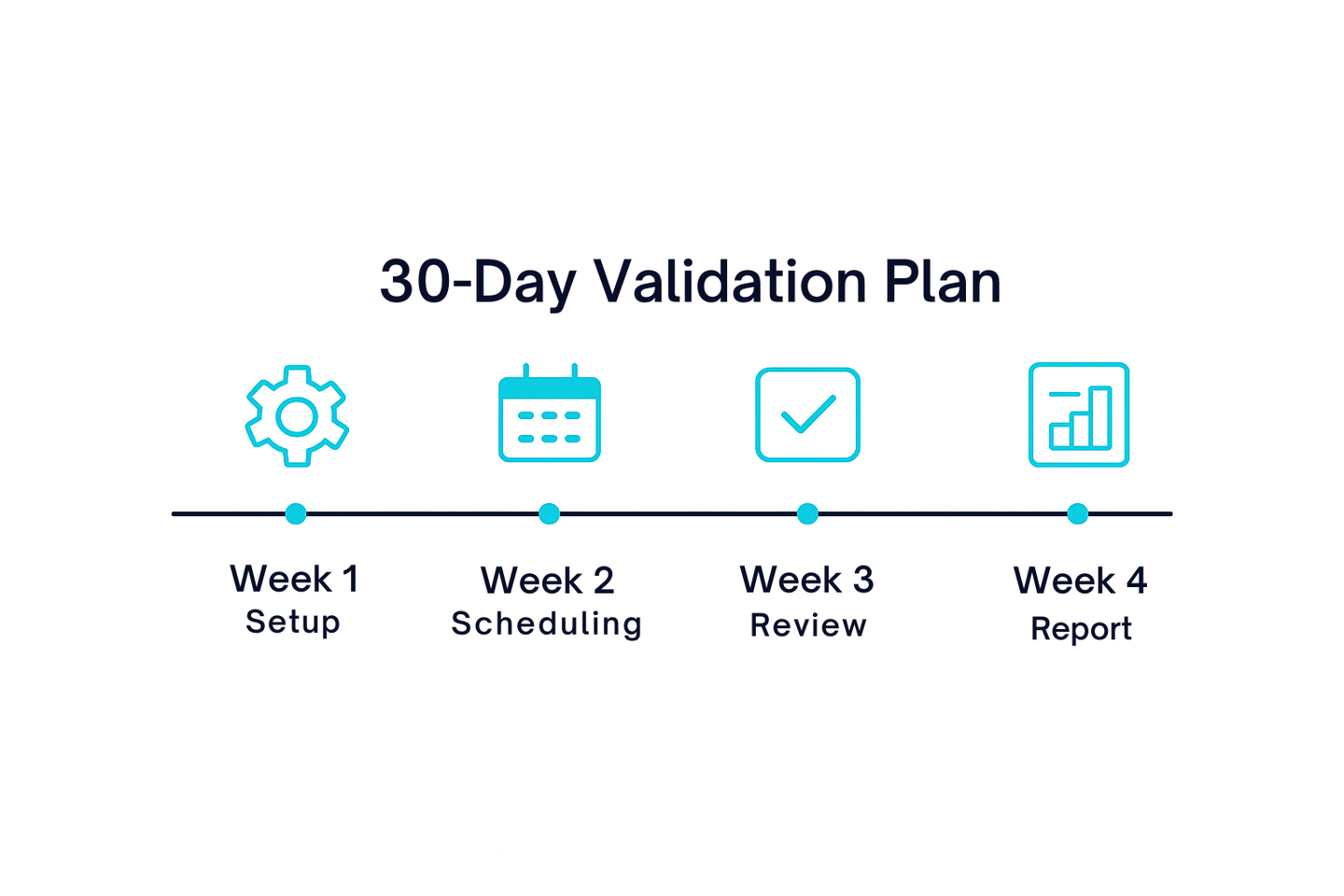
How Do You Validate ROI In 30 Days Without Changing Everything?
Start small, measure precisely, and show results quickly.
Week 1: Set up your account types and permissions. Confirm hiring stages, define your label set, and sync calendars. Send one scheduling proposal from the candidate thread and confirm it appears on the dashboard. Capture baseline metrics for one role: time to first interview, interviews per hire, and recruiter minutes per interviewed candidate.
Weeks 2 - 3: Run the pilot. Require all invites for that role to go through the Scheduling tool and on-platform email. Track time to first interview and show-up rates. Make labels and closed states mandatory. Watch the number of duplicate screenings drop.
Week 4: Pull a one-page report showing your improvements: faster scheduling, fewer interview rounds, and reduced recruiter time. Include one screenshot from the Insights dashboard highlighting a source you dropped mid-month. Present it to leadership with a simple expand-or-stop recommendation.
Close the loop by adding that one-pager to your next product demo or onboarding call with the Wantedly Hire team and ask for a go or no-go recommendation on wider rollout based on the pilot results. This keeps the decision grounded in your own data and in how Wantedly Hire actually performs for your roles.
What Common Mistakes Slow ATS ROI, And How Can You Avoid Them?
Many teams make the same avoidable mistakes.
They track interview counts but ignore the hours spent coordinating them. They let statuses drift and end up rescanning candidates. They run pilots too broad to measure accurately. They skip documenting plan-lifecycle details, leaving procurement to chase clarity later. And they wait for the month-end exports when weekly insights could have shown the problem earlier.
Avoid all five by doing three things: measure minutes, label consistently, and review insights weekly.
Common Questions Asked
Q: How soon is payback if we hire fewer than five roles per quarter?
A: Payback depends on your own volumes and salaries, but even small teams can see value once they measure recruiter and interviewer minutes saved per candidate. The practical way to answer this is to run a 30 day pilot in Wantedly Hire, track time to first interview and coordination effort, and plug those numbers into your ROI sheet rather than relying on generic benchmarks.
Q: Do we need heavy training to use Wantedly Hire ATS?
A: No. Most teams begin using Wantedly Hire within a few business days, with guided onboarding to set up workflows, calendars and data migration. Once that is done, proposing times, sending scheduling links, reviewing candidates and logging evaluations all happen in one interface, so new users only need a short walkthrough to become productive.
Q: Can we control who sees what inside Wantedly Hire?
A: Yes. Wantedly Hire lets you assign account types and permissions so admins, recruiters, hiring managers and interviewers each have appropriate access. Setting these roles before you invite reviewers ensures that candidate and job information visibility matches their responsibilities.
Q: What happens if our plan changes after the pilot?
A: Wantedly Hire offers different plans and describes how contracts and usage work in its terms and FAQ. If you expect to change plans after a pilot, raise this during your demo so the team can explain what happens to access and data if you upgrade, downgrade or discontinue a paid plan, and you can reflect that lifecycle in your risk notes.
Q: Can Insights in Wantedly Hire replace our spreadsheets for weekly reviews?
A: For weekly hiring reviews, the built-in analytics and Insights dashboard are usually enough. You can see candidate counts, conversion between stages and performance by source without exporting anything. If you still need spreadsheets for audits or quarterly reporting, you can export data from Wantedly Hire and keep the dashboard for quick decision-making.
Q: Does Wantedly Hire really eliminate inbox hunting during recruitment?
A: It significantly reduces it. Candidate conversations, interview scheduling and decisions live together in the candidate view, and communication runs through on platform email and messaging. Instead of searching multiple inboxes and threads, your team can work from the single message thread attached to each candidate as the source of truth.
Conclusion: The pragmatic, finance-backed rollout path
If you want a defensible decision and quick proof of value, start small but measure tightly. Wantedly Hire centralises candidate communication, proposes and confirms interviews from the same thread, and syncs seamlessly with Google Calendar. Its labels, close states, and Insights help your team standardise reviews and focus effort where it counts.
These are not lofty transformations. They are practical controls any SME can adopt within days. Do that, and the ROI appears in months, not years.
Pilot Wantedly Hire on one high-impact role for 30 days. Measure the three metrics, and expand only if the payback is visible in your results.
Wantedly Hire is an application tracking system optimised for modern hiring practices. Experience seamless hiring with tailored workflows designed to align with your recruitment structure, automated interview scheduling, and actionable insights to optimise hiring performance!
Sign up for a demo and enjoy a limited-time discount on your subscription.
/assets/images/7053115/original/43c7433b-4920-4cf1-b0b0-c44aec7bd947?1624242511)


)/assets/images/7053115/original/43c7433b-4920-4cf1-b0b0-c44aec7bd947?1624242511)

/assets/images/21128915/original/43c7433b-4920-4cf1-b0b0-c44aec7bd947?1747371924)