
Building Accountability from Scratch: The Challenge of Corpy's VP of Corporate, Hattori

At Corpy, the driving force behind establishing company-wide standards and processes — and building an organization capable of swift decision-making — is Hattori, Director and VP of Corporate. After diverse experiences living in Michigan, working at Renesas, and consulting at KPMG, why did he take on the challenge of an AI startup? We spoke with him about the value back-office operations can bring to "AI Safety," and the secrets to leading a multinational organization.
From the Front Lines of Financial Crisis to the "Essence" of Accounting and Management
— Could you tell us about your career path so far? And where were the turning points?
Hattori: My most powerful defining experience was facing a financial crisis at a semiconductor manufacturer where I worked before my previous job. It was an intense period with the company's very survival at stake.
What I acutely realized was an overwhelming sense of crisis about my own skills. In the semiconductor business — an art form where advanced technology and massive investment intertwine — my knowledge of accounting and management theory felt completely powerless. I realized there was an unbridgeable gap between real-world management challenges and textbook knowledge.
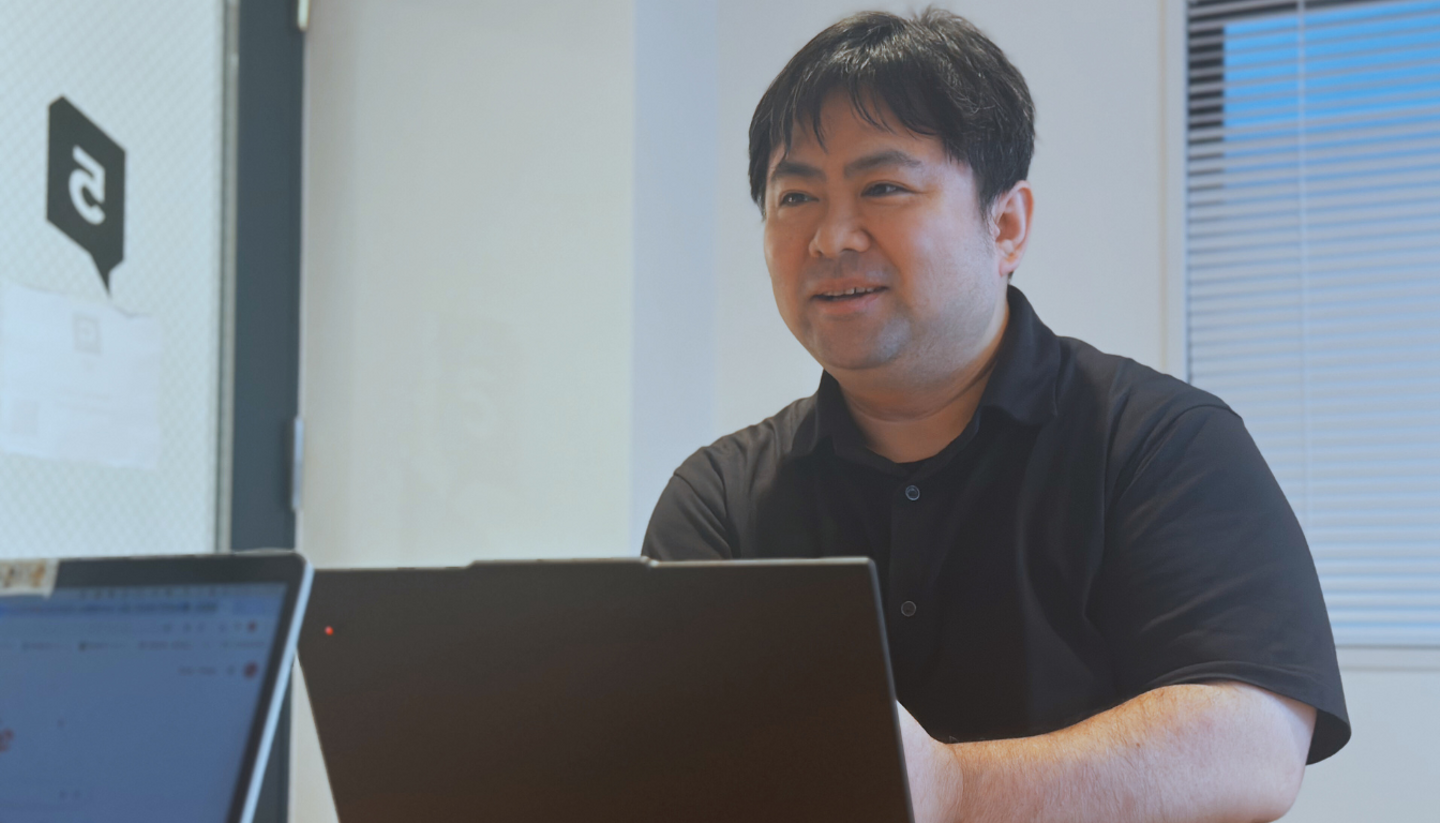
— Did that experience lead you to "go back to school" at a professional graduate school for accounting?
Hattori: Yes. Seeing the consultants who came in to support us brilliantly mapping out future plans was a shock — the depth of their thinking was extraordinary. I wanted to develop real expertise that contributes to management, not just be a "calculator."
So while continuing to work, I decided to pursue a professional graduate school for accounting. There, rather than simply memorizing the rules of IFRS (International Financial Reporting Standards), I focused intensely on the underlying principles — understanding "why does this rule exist?" As a result, I developed the ability to think from first principles rather than mechanically applying standards. That experience has become the foundation of my decision-making today.
Balancing "Logic" and "Emotion" to Lead a Multinational Organization
— I understand that overseas experience has also had a big influence on your core values.
Hattori: My time in Michigan, where I spent my middle and high school years, was significant. In an environment where people from diverse backgrounds come together, staying silent gets you nowhere. I learned firsthand that "clarifying the point, debating thoroughly, and building consensus with genuine buy-in" is the only way to move business forward.
Through my subsequent experience at professional firms, "the ability to coordinate in multicultural, multinational environments" was combined with "hypothesis-driven, logical thinking." Not just building a track record, but constructing logical backing for "why can we say this is right?" That became my weapon.
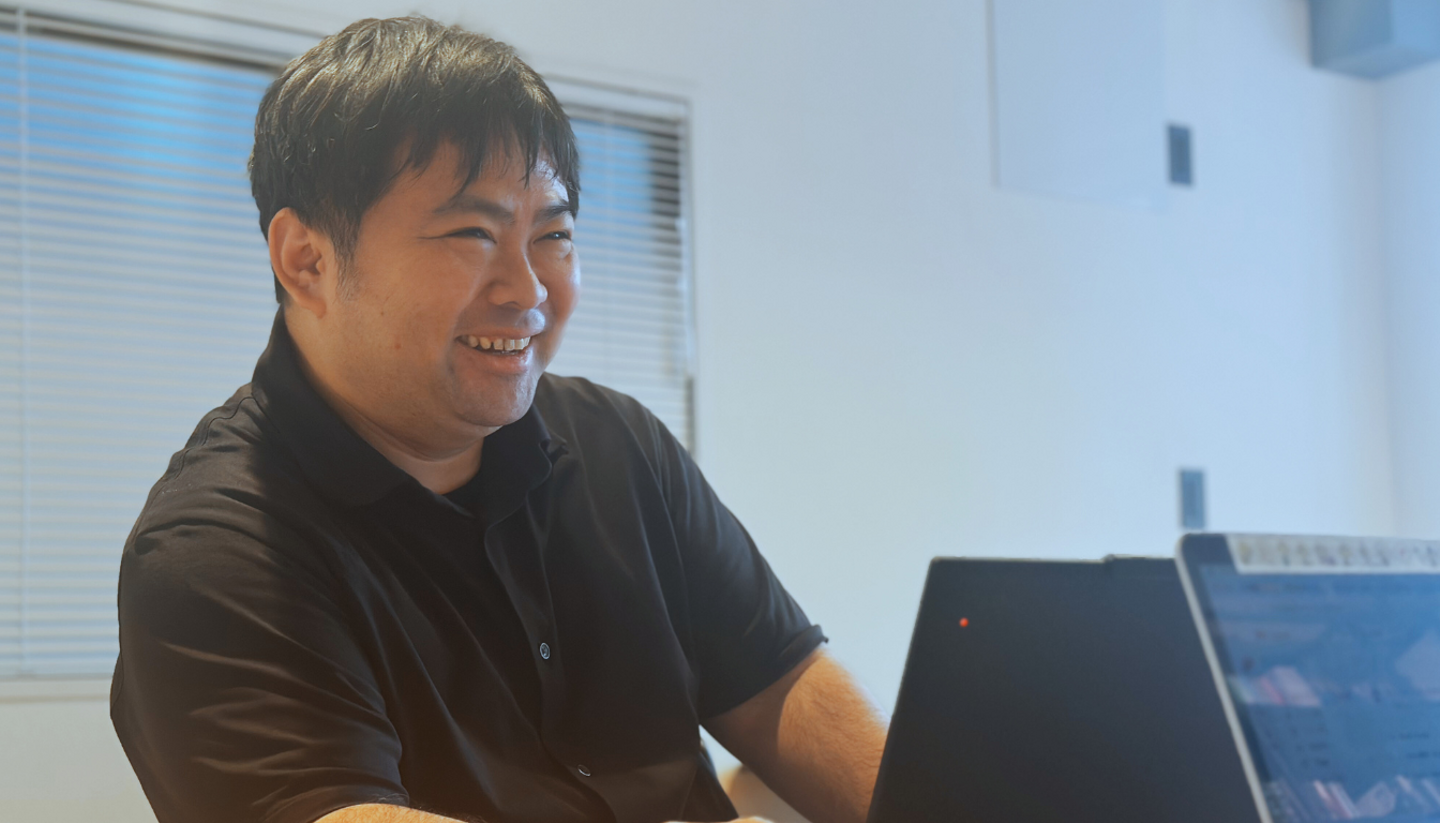
— How has that experience been applied in a multinational organization like Corpy?
Hattori: What I value is communication that "doesn't impose." People don't move on logic alone. Especially in a place like Corpy, where diverse professionals gather, consideration for the other person's background and emotions is essential.
For example, when establishing standards for labor management rules, rather than simply saying "follow the rules because they're the rules," I carefully explain why these standards are necessary and how they contribute to the business. Balancing reason and emotion while embedding new "standards" into the organization — I find that deeply challenging and, at the same time, deeply rewarding.
Building the Foundation of "AI Safety" from the Back Office
— Why did you, a professional in accounting and finance, choose the field of AI startups?
Hattori: Having been involved in internal controls during my consulting days, I was strongly drawn to the unknown field of "quality assurance for AI." I was genuinely curious about how my background in governance and standards-building could be applied to this cutting-edge field.
I also wanted to take on the challenge of a broad corporate role — designing the organization from scratch — rather than being confined to accounting and finance alone.
— What value can the back office provide in mission-critical areas like AI Safety?
Hattori: It's about guiding the organization to properly recognize risk and execute countermeasures — accepting, avoiding, reducing, and transferring it. The back office is not simply a brake. By organizing the right information and supporting decision-making, we can accelerate the company's speed and build an autonomous organization that avoids over-reliance on individuals. I believe my mission is to document the standards and processes across the entire organization and create an environment where everyone can work efficiently and fulfill their accountability.
Building the Best Organization with Our Own Hands
— What kind of organization do you want Corpy to become?
Hattori: Organizations always involve "judgment." Hiring, investment, contracts, evaluation — decision-making is required in every situation. Currently, there are still many areas that rely on the experience and tacit knowledge of specific individuals, but over-reliance on individuals is a major risk for company growth. It may look fast in the short term, but it will inevitably become a bottleneck when it's time to scale.
I don't think the important thing is binding people with rules. Having standards and evidence is precisely what creates reproducibility in discussions, and as a result, management speed increases. I want to make Corpy a "company that can fulfill its accountability." I believe that is the prerequisite for an organization that can grow sustainably.
— You oversee a wide range from accounting and finance to HR and legal. What are you most focused on right now to make Corpy a "resilient organization"?
Hattori: I'd say people's growth and building mechanisms to structurally address challenges. The most important thing in an organization is "people." How much people can grow, how efficiently they can work — that determines the strength of the organization.
Problems happen in startups — that's a given. In fact, an organization where no problems occur is more dangerous. What matters is not whether problems exist, but how we confront them and how we design prevention mechanisms. Not processing things emotionally, but organizing them structurally. That's why setting up evaluation systems, feedback mechanisms, and clarity of responsibility is my highest priority right now.
A resilient organization is not one where no problems occur — it's one that can withstand problems, learn from them, and evolve. My role is to clarify "is this risk acceptable?" and "what measures will allow us to move forward?", and to accelerate management's decision-making. Reliability is not about avoiding risk — it's about understanding risk, managing it, and creating a state where you can move forward.
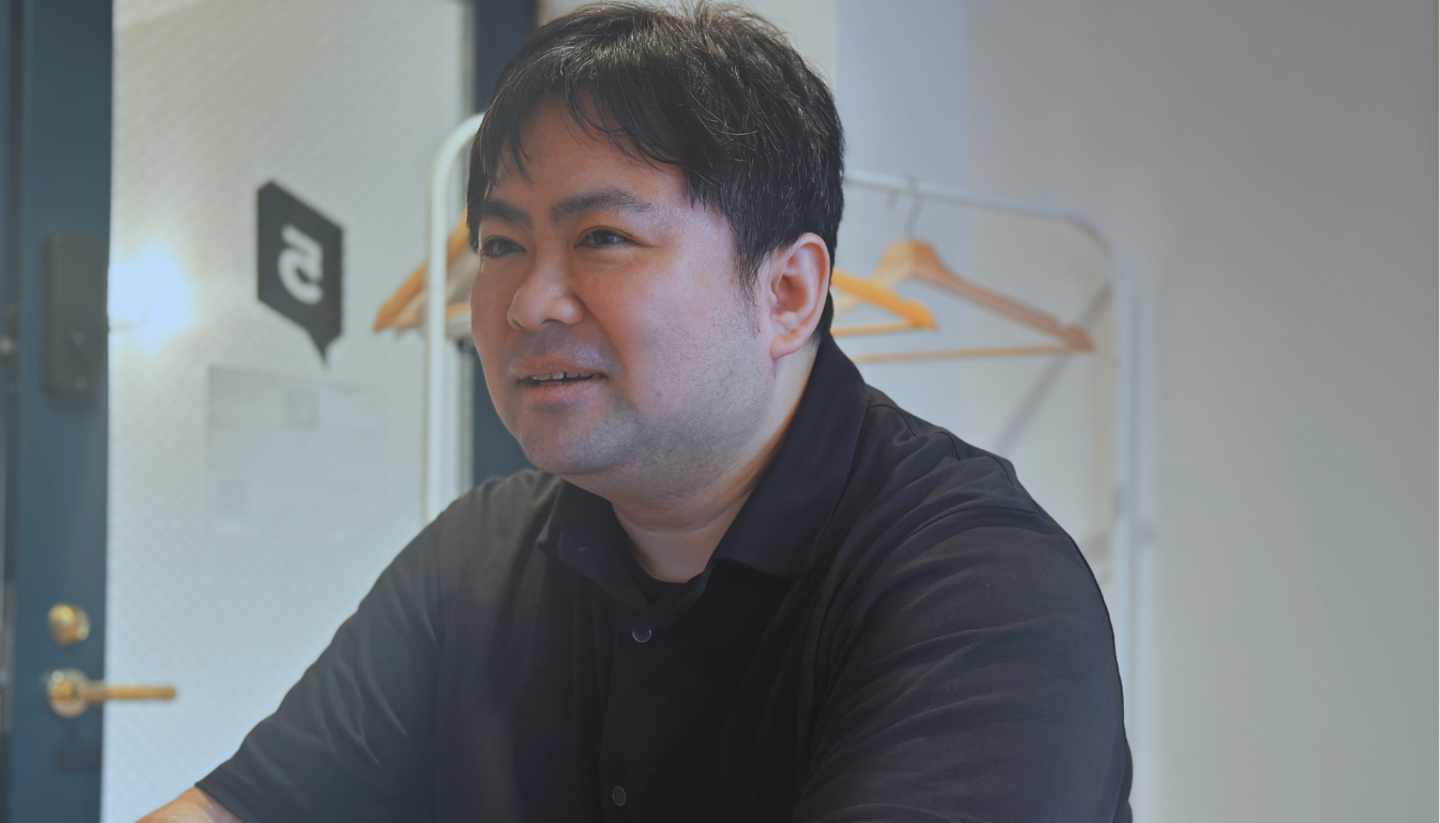
— Finally, do you have a message for people considering joining Corpy?
Hattori: Corpy is a place where highly ambitious engineers and business members who sincerely confront social challenges resonate with each other. There is still much that is not yet in place, but that is also a great opportunity to "build the best organization with our own hands."
Corpy doesn't have a finished set of rules yet. That's precisely why, rather than waiting for instructions, you need the flexibility to find challenges yourself, think from scratch about "what is the best answer for this company right now?" and deliver output. I think "flexibility" and "a sense of ownership" are key.
I look forward to working shoulder to shoulder in this stimulating environment with someone who resonates with our mission of "supporting society's trust through new technology," and who will help us build a resilient organization together.
/assets/images/1762268/original/4b194597-9c4f-4a23-9254-a2d89aff8688?1667698318)


/assets/images/1762268/original/4b194597-9c4f-4a23-9254-a2d89aff8688?1667698318)

/assets/images/1762268/original/4b194597-9c4f-4a23-9254-a2d89aff8688?1667698318)